The Domaine Victor Sornin of Beaujolais-Villages of Beaujolais
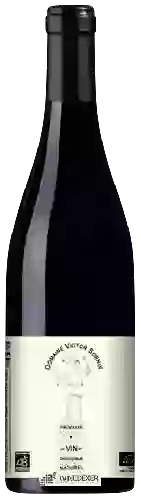
Domaine Victor Sornin
The winery offers 5 different wines
3.8


Note - 1Note - 1Note - 1Note - 0.5Note - 0
Its wines get an average rating of 3.8.
It is ranked in the top 5 of the estates of Beaujolais.
It is located in Beaujolais-Villages in the region of Beaujolais
Find the Domaine Victor Sornin on Facebook

The Domaine Victor Sornin is one of the largest wineries in the world. It offers 5 wines for sale in of Beaujolais-Villages to come and discover on site or to buy online.

Top Domaine Victor Sornin wines

Looking for the best Domaine Victor Sornin wines in Beaujolais-Villages among all the wines in the region? Check out our tops of the best red, white or effervescent Domaine Victor Sornin wines. Also find some food and wine pairings that may be suitable with the wines from this area. Learn more about the region and the Domaine Victor Sornin wines with technical and enological descriptions.

The top red wines of Domaine Victor Sornin

Food and wine pairings with a red wine of Domaine Victor Sornin

How Domaine Victor Sornin wines pair with each other generally quite well with dishes of pasta, veal or pork such as recipes of salmon and spinach lasagna, tripe in the style of caen or oven-baked sausage.

Organoleptic analysis of red wines of Domaine Victor Sornin

On the nose the red wine of Domaine Victor Sornin. often reveals types of flavors of cherry, earthy or blackberry and sometimes also flavors of blueberry, strawberries or licorice. In the mouth the red wine of Domaine Victor Sornin. is a with a nice freshness.

The best vintages in the red wines of Domaine Victor Sornin

  • 2015With an average score of 3.80/5
  • 2016With an average score of 3.80/5
  • 2018With an average score of 3.77/5
  • 2019With an average score of 3.70/5
  • 2014With an average score of 3.60/5
  • 2017With an average score of 3.50/5

The grape varieties most used in the red wines of Domaine Victor Sornin.

  • Gamay

Discovering the wine region of Beaujolais-Villages

Beaujolais Villages is the appellation for red, white and rosé wines from an area of 38 villages in the northern Beaujolais. The hilly terrain and granitic soil are considered superior to the flatter land of southern Beaujolais. As a result, Beaujolais Villages wines are considered to be of higher quality than those of the simple Beaujolais appellation. These juicy, light wines are based largely on the Gamay Grape.

They have a variety of red fruit and spice characters. Most of the wines at this level are made by semi-carbonic Maceration, called traditional maceration here. A small proportion of Chardonnay, Aligoté, Melon de Bourgogne, Pinot Gris or Pinot Noir is allowed in the blend. These grape varieties must not represent more than 15% of the total Vineyard area.

The top white wines of Domaine Victor Sornin

Food and wine pairings with a white wine of Domaine Victor Sornin

How Domaine Victor Sornin wines pair with each other generally quite well with dishes of pork, rich fish (salmon, tuna etc) or vegetarian such as recipes of quick brioche sausage, salmon à la plancha with vegetables or zucchini and goat cheese quiche.

The best vintages in the white wines of Domaine Victor Sornin

  • 0With an average score of 3.60/5
  • 2006With an average score of 3.60/5
  • 2019With an average score of 3.40/5

The grape varieties most used in the white wines of Domaine Victor Sornin.

  • Chardonnay

Discover the grape variety: Bargine

This grape variety was formerly cultivated in the Jura and is said to have made the reputation of the Château-Châlon appellation. Today, it is no longer present in the vineyard.

Discover other wineries and winemakers neighboring the Domaine Victor Sornin

Planning a wine route in the of Beaujolais-Villages? Here are the wineries to visit and the winemakers to meet during your trip in search of wines similar to Domaine Victor Sornin.

Discover the grape variety: Bertille Seyve 872

Interspecific crossing made by Bertille Seyve (1864-1944) between 85 Seibel and 2 Gaillard. This direct producing hybrid was mainly multiplied in the center of France where we found it and photographed it, but also in the departments of the Rhone valley, the Loiret valley, Isère, Vienne and Nièvre.
