The Château des Vierres of Beaujolais-Villages of Beaujolais
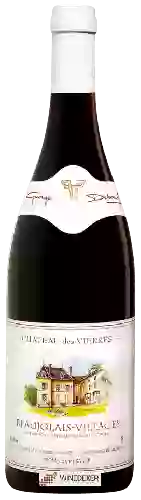
The Château des Vierres is one of the world's great estates. It offers 1 wines for sale in of Beaujolais-Villages to come and discover on site or to buy online.
Looking for the best Château des Vierres wines in Beaujolais-Villages among all the wines in the region? Check out our tops of the best red, white or effervescent Château des Vierres wines. Also find some food and wine pairings that may be suitable with the wines from this area. Learn more about the region and the Château des Vierres wines with technical and enological descriptions.
How Château des Vierres wines pair with each other generally quite well with dishes of pasta, veal or pork such as recipes of gratin of coquillettes with ham, sauté of pork with carrots and potatoes or cassoulet.
On the nose the red wine of Château des Vierres. often reveals types of flavors of red fruit. In the mouth the red wine of Château des Vierres. is a with a nice freshness.
Beaujolais Villages is the appellation for red, white and rosé wines from an area of 38 villages in the northern Beaujolais. The hilly terrain and granitic soil are considered superior to the flatter land of southern Beaujolais. As a result, Beaujolais Villages wines are considered to be of higher quality than those of the simple Beaujolais appellation. These juicy, light wines are based largely on the Gamay Grape.
They have a variety of red fruit and spice characters. Most of the wines at this level are made by semi-carbonic Maceration, called traditional maceration here. A small proportion of Chardonnay, Aligoté, Melon de Bourgogne, Pinot Gris or Pinot Noir is allowed in the blend. These grape varieties must not represent more than 15% of the total Vineyard area.
Planning a wine route in the of Beaujolais-Villages? Here are the wineries to visit and the winemakers to meet during your trip in search of wines similar to Château des Vierres.
Verdesse is a white grape variety, grown on an area of about 5 ha. It is found particularly in the Grésivaudan and Drac valleys. It is also called verdêche, étraire blanche de Grenoble or verdasse. The leaves are lobed and dark green in colour. Long, sturdy stalks carry the bunches. A juicy and sweet flesh is found under the white skin, turning amber red, of the mature berries. The berries are medium-sized and ellipsoid in shape. To be productive and vigorous, the variety is pruned rather long. Verdesse is not very resistant to mildew and powdery mildew, but it is very resistant to grey rot. A particularly alcoholic wine is produced from this variety. It has a pleasant flavour and a vegetal and floral scent. This wine does not keep long, and is best consumed during the first few years.

