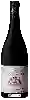
Domaine Philippe NaddefBourgogne Rouge
 Red wine


In the mouth this red wine is a powerful with a nice freshness.
This wine generally goes well with poultry, beef or veal.

Taste structure of the Bourgogne Rouge from the Domaine Philippe Naddef
Light | Bold | |
Smooth | Tannic | |
Dry | Sweet | |
Soft | Acidic |
In the mouth the Bourgogne Rouge of Domaine Philippe Naddef in the region of Burgundy is a powerful with a nice freshness.
Food and wine pairings with Bourgogne Rouge
Pairings that work perfectly with Bourgogne Rouge



Original food and wine pairings with Bourgogne Rouge

The Bourgogne Rouge of Domaine Philippe Naddef matches generally quite well with dishes of beef, veal or game (deer, venison) such as recipes of adapted vietnamese fondue, vienna cutlets or conejo al ajillo (spain).
Details and technical informations about Domaine Philippe Naddef's Bourgogne Rouge.
Discover the grape variety: Pinot noir
Elegant reds, light in colour with silky tannins, showing strawberry, cherry and raspberry aromas, evolving to forest floor, mushroom and spice with age. Fresh acidity, delicate finish. Star of the Côte d'Or (Romanée-Conti, Chambertin, Volnay), pillar of Champagne (Blanc de Noirs) and signature of Oregon, Central Otago and Sonoma Coast. An early-ripening Burgundian variety, one of the world's greatest.
Last vintages of this wine
The best vintages of Bourgogne Rouge from Domaine Philippe Naddef are 2015
Informations about the Domaine Philippe Naddef
The Domaine Philippe Naddef is one of of the world's greatest estates. It offers 21 wines for sale in the of Burgundy to come and discover on site or to buy online.

The wine region of Burgundy
Absolute reference for great terroir wines: opulent, mineral Chardonnay in whites (chiselled Chablis, buttery Meursault, majestic Montrachet), fine and silky Pinot Noir in reds (full-bodied Gevrey, structured Pommard, delicate Volnay). Exceptional age-worthy wines with complex notes - red fruits, undergrowth, butter, hazelnut. Some lively Aligoté and light Gamay (Mâconnais). 29,500 ha, 84 tiered AOCs (Régionale, Village, 1er Cru, Grand Cru), 1,247 UNESCO Climats.
The word of the wine: Ultra raw (or natural raw)
A type of champagne that has not received any dosage liqueur.