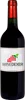
Domaine le ClaudClaud de Madame Grand Venant
 Red wine
This wine generally goes well with beef, veal or pasta.
Food and wine pairings with Claud de Madame Grand Venant
Pairings that work perfectly with Claud de Madame Grand Venant



Original food and wine pairings with Claud de Madame Grand Venant
The Claud de Madame Grand Venant of Domaine le Claud matches generally quite well with dishes of beef, pasta or veal such as recipes of beef luc lake, three ways to prepare chinese noodles or roast veal with black olives.
Details and technical informations about Domaine le Claud's Claud de Madame Grand Venant.
Discover the grape variety: Esther
Interspecific crossing between the white Villard (Seyve-Villard 12375) and the magarcsi csemege obtained in 1969 in Hungary by Sandor Szegedi. This hybrid, most often used as a table grape, has been little multiplied and is still of great interest to amateur gardeners. It can be found in Hungary, Germany, Austria, Switzerland, Slovenia, ... completely unknown in France.
Informations about the Domaine le Claud
The Domaine le Claud is one of of the world's greatest estates. It offers 21 wines for sale in the of Languedoc to come and discover on site or to buy online.

The wine region of Languedoc
Languedoc (formerly Coteaux du Languedoc) is a key appellation used in the Languedoc-Roussillon wine region of southern France. It covers Dry table wines of all three colors (red, white and rosé) from the entire region, but leaves Sweet and Sparkling wines to other more specialized appellations. About 75% of all Languedoc wines are red, with the remaining 25% split roughly down the middle between whites and rosés. The appellation covers most of the Languedoc region and almost a third of all the vineyards in France.
The wine region of Languedoc-Roussillon
Languedoc (formerly Coteaux du Languedoc) is a key appellation used in the Languedoc-Roussillon wine region of southern France. It covers Dry table wines of all three colors (red, white and rosé) from the entire region, but leaves Sweet and Sparkling wines to other more specialized appellations. About 75% of all Languedoc wines are red, with the remaining 25% split roughly down the middle between whites and rosés. The appellation covers most of the Languedoc region and almost a third of all the vineyards in France.
The word of the wine: Tastevin
Metal cup, wide and of low height, being used to mirror and taste the wine. Still used in wine brotherhoods for its emblematic and folkloric character, the tastevin has been replaced by the various tasting glasses.