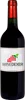
Domaine le ClaudChâteau Claud Bellevue Seignorie
 Red wine


In the mouth this red wine is a powerful with a nice balance between acidity and tannins.
This wine generally goes well with beef, veal or pasta.
Taste structure of the Château Claud Bellevue Seignorie from the Domaine le Claud
Light | Bold | |
Smooth | Tannic | |
Dry | Sweet | |
Soft | Acidic |
In the mouth the Château Claud Bellevue Seignorie of Domaine le Claud in the region of Languedoc-Roussillon is a powerful with a nice balance between acidity and tannins.
Food and wine pairings with Château Claud Bellevue Seignorie
Pairings that work perfectly with Château Claud Bellevue Seignorie



Original food and wine pairings with Château Claud Bellevue Seignorie
The Château Claud Bellevue Seignorie of Domaine le Claud matches generally quite well with dishes of beef, pasta or veal such as recipes of feijoada ( portuguese cassoulet ), pasta carbonara or roast veal with cider.
Details and technical informations about Domaine le Claud's Château Claud Bellevue Seignorie.
Discover the grape variety: Sercial
Portuguese, an ancient grape variety cultivated in particular in the Minho region and on the island of Madeira. It should not be confused with the cerceal branco and cerceal du Dâo, which are also related to the ramisco, trincadeira from Alentejo, alvarelhâo from Douro, etc. The Sercial can be found in Portugal, Spain, Italy, Bulgaria, Ukraine, Crimea, Russia, Argentina, South Africa, ... little known in France.
Last vintages of this wine
The best vintages of Château Claud Bellevue Seignorie from Domaine le Claud are 2013
Informations about the Domaine le Claud
The Domaine le Claud is one of of the world's greatest estates. It offers 21 wines for sale in the of Grès de Montpellier to come and discover on site or to buy online.

The wine region of Grès de Montpellier
The wine region of Grès de Montpellier is located in the region of Languedoc of Languedoc-Roussillon of France. Wineries and vineyards like the Mas du Novi - Domaine Saint Jean du Noviciat or the Château de Flaugergues produce mainly wines red, white and pink. The most planted grape varieties in the region of Grès de Montpellier are Mourvèdre, Gewurztraminer and Morrastel-Bouschet, they are then used in wines in blends or as a single variety. On the nose of Grès de Montpellier often reveals types of flavors of oak, caramel or menthol and sometimes also flavors of red fruit, black fruit or cream.
The wine region of Languedoc-Roussillon
Languedoc (formerly Coteaux du Languedoc) is a key appellation used in the Languedoc-Roussillon wine region of southern France. It covers Dry table wines of all three colors (red, white and rosé) from the entire region, but leaves Sweet and Sparkling wines to other more specialized appellations. About 75% of all Languedoc wines are red, with the remaining 25% split roughly down the middle between whites and rosés. The appellation covers most of the Languedoc region and almost a third of all the vineyards in France.
The word of the wine: Destemming
Action consisting in separating the grapes from the stalk before vinification. The stalk, the woody part of the bunch, may give the wine an unpleasant vegetal character.