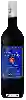
Winery GaubyLe Monde est Une Ferme
 Red wine
In the mouth this red wine is a powerful.
This wine generally goes well with poultry, beef or lamb.
Taste structure of the Le Monde est Une Ferme from the Winery Gauby
Light | Bold | |
Smooth | Tannic | |
Dry | Sweet | |
Soft | Acidic |
In the mouth the Le Monde est Une Ferme of Winery Gauby in the region of Languedoc-Roussillon is a powerful.
Food and wine pairings with Le Monde est Une Ferme
Pairings that work perfectly with Le Monde est Une Ferme



Original food and wine pairings with Le Monde est Une Ferme

The Le Monde est Une Ferme of Winery Gauby matches generally quite well with dishes of beef, pasta or lamb such as recipes of empanadas de carne (argentina), pasta alla norma or sweet and sour braised leg of lamb.
Details and technical informations about Winery Gauby's Le Monde est Une Ferme.
Discover the grape variety: Muscadoule
This direct-producing hybrid is the result of an interspecific cross between Villard blanc and Muscat de Hambourg, obtained in 1937 by Galibert Alfred and Coulondre Eric. Almost no longer multiplied, it is now clearly on the verge of extinction.
Informations about the Winery Gauby
The Winery Gauby is one of of the world's great estates. It offers 29 wines for sale in the of Languedoc-Roussillon to come and discover on site or to buy online.

The wine region of Languedoc-Roussillon
Languedoc (formerly Coteaux du Languedoc) is a key appellation used in the Languedoc-Roussillon wine region of southern France. It covers Dry table wines of all three colors (red, white and rosé) from the entire region, but leaves Sweet and Sparkling wines to other more specialized appellations. About 75% of all Languedoc wines are red, with the remaining 25% split roughly down the middle between whites and rosés. The appellation covers most of the Languedoc region and almost a third of all the vineyards in France.
The word of the wine: Rootstock
American vine on which a French vine is grafted. This is the consequence of the phylloxera that destroyed the vineyard at the end of the 19th century: after much trial and error, it was discovered that the "pest" spared the roots of the American vines, and the technique became widespread.