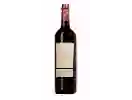
Domaine FerretCuvée Prestige Gaillac
 Red wine
This wine generally goes well with poultry, beef or lamb.
Food and wine pairings with Cuvée Prestige Gaillac
Pairings that work perfectly with Cuvée Prestige Gaillac



Original food and wine pairings with Cuvée Prestige Gaillac

The Cuvée Prestige Gaillac of Domaine Ferret matches generally quite well with dishes of beef, lamb or poultry such as recipes of beef with cider, lamb chops with honey and spices or homemade meat/goat ravioli.
Details and technical informations about Domaine Ferret's Cuvée Prestige Gaillac.
Discover the grape variety: Cabernet-Sauvignon
Cabernet-Sauvignon noir is a grape variety that originated in France (Bordeaux). It produces a variety of grape specially used for wine making. It is rare to find this grape to eat on our tables. This variety of grape is characterized by small bunches, and small grapes. Cabernet-Sauvignon noir can be found in many vineyards: South-West, Loire Valley, Languedoc & Roussillon, Cognac, Bordeaux, Armagnac, Rhone Valley, Provence & Corsica, Savoie & Bugey, Beaujolais.
Informations about the Domaine Ferret
The Domaine Ferret is one of of the world's greatest estates. It offers 5 wines for sale in the of South West to come and discover on site or to buy online.

The wine region of South West
The South-West is a large territorial area of France, comprising the administrative regions of Aquitaine, Limousin and Midi-Pyrénées. However, as far as the French wine area is concerned, the South-West region is a little less clear-cut, as it excludes Bordeaux - a wine region so productive that it is de facto an area in its own right. The wines of the South West have a Long and eventful history. The local rivers play a key role, as they were the main trade routes to bring wines from traditional regions such as Cahors, Bergerac, Buzet and Gaillac to their markets.
The word of the wine: Tartar (deposit)
White, chalky deposits that occur as a result of precipitation inside bottles and are often considered by consumers as a defect. They are in fact tartaric salts formed by tartaric acid, potassium and calcium naturally present in the wine. This deposit does not alter the quality of the wine and can be eliminated by a simple decanting.