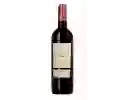
Domaine de la PlaineNuits Blanches Muscat de Frontignan Doux Naturel
 Sweet wine
This wine generally goes well with rich fish (salmon, tuna etc), shellfish or mild and soft cheese.
Food and wine pairings with Nuits Blanches Muscat de Frontignan Doux Naturel
Pairings that work perfectly with Nuits Blanches Muscat de Frontignan Doux Naturel



Original food and wine pairings with Nuits Blanches Muscat de Frontignan Doux Naturel


The Nuits Blanches Muscat de Frontignan Doux Naturel of Domaine de la Plaine matches generally quite well with dishes of pasta, rich fish (salmon, tuna etc) or shellfish such as recipes of roast beef in a foie gras and chanterelle crust, tomato, zucchini and tuna flan or mussels with roquefort cheese.
Details and technical informations about Domaine de la Plaine's Nuits Blanches Muscat de Frontignan Doux Naturel.
Discover the grape variety: Othello
Interspecific cross between the Clinton and the frankenthal or black-hamburg obtained in 1859 by Charles Arnold of Paris in Canada (Brant County in Ontario). In France, it is one of the six hybrids prohibited since 1935 (included in the European regulations): the Clinton, the Herbemont, the Isabelle, the Jacquez, the Noah and the Othello. It has been used as a sire in several crosses, notably by Couderc and Seibel. Today, the Othello has practically disappeared.
Informations about the Domaine de la Plaine
The Domaine de la Plaine is one of of the world's greatest estates. It offers 3 wines for sale in the of South West to come and discover on site or to buy online.

The wine region of South West
The South-West is a large territorial area of France, comprising the administrative regions of Aquitaine, Limousin and Midi-Pyrénées. However, as far as the French wine area is concerned, the South-West region is a little less clear-cut, as it excludes Bordeaux - a wine region so productive that it is de facto an area in its own right. The wines of the South West have a Long and eventful history. The local rivers play a key role, as they were the main trade routes to bring wines from traditional regions such as Cahors, Bergerac, Buzet and Gaillac to their markets.
The word of the wine: Smoked white
See sauvignon.