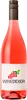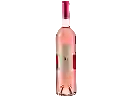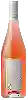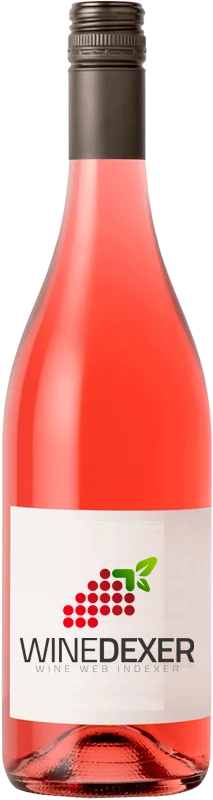
Domaine de CoyeuxMuscadin Rosé
 Pink wine
This wine generally goes well with pork, poultry or rich fish (salmon, tuna etc).
Food and wine pairings with Muscadin Rosé
Pairings that work perfectly with Muscadin Rosé



Original food and wine pairings with Muscadin Rosé

The Muscadin Rosé of Domaine de Coyeux matches generally quite well with dishes of pork, rich fish (salmon, tuna etc) or shellfish such as recipes of guinea fowl with cabbage, salmon and avocado chirashi or mussels with rosemary and barbecue.
Details and technical informations about Domaine de Coyeux's Muscadin Rosé.
Discover the grape variety: Merlese
Intraspecific crossing between sangiovese or nielluccio and merlot noir obtained in 1983 by the University of Bologna (Italy), registered since 2007 in the Italian Official Register of wine grape varieties... totally unknown in France.
Informations about the Domaine de Coyeux
The Domaine de Coyeux is one of of the world's great estates. It offers 24 wines for sale in the of Rhône méridional to come and discover on site or to buy online.

The wine region of Rhône méridional
Côtes du Rhône is a regional appellation in the Rhône Valley in eastern France. It applies to red, rosé and white wines, and includes more than 170 villages. The area follows the course of the Rhône southward for 125 miles (200 km) from Saint-Cyr-sur-le-Rhône to Avignon. A small portion of the wines in the appellation are white wines.
The wine region of Rhone Valley
The Rhone Valley is a key wine-producing region in Southeastern France. It follows the North-south course of the Rhône for nearly 240 km, from Lyon to the Rhône delta (Bouches-du-Rhône), near the Mediterranean coast. The Length of the valley means that Rhône wines are the product of a wide variety of soil types and mesoclimates. The viticultural areas of the region cover such a distance that there is a widely accepted division between its northern and southern parts.
The word of the wine: Hat
Solid part (marc), composed of pips and skins (sometimes of the stalk), which forms at the top of the tank during fermentation. The pigeage consists in breaking this cap to put back in suspension these elements and to favour the exchanges between the juice and the skins.