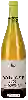
Domaine BlomacSauvignon Blanc
 White wine


In the mouth this white wine is a .
This wine generally goes well with vegetarian, poultry or lean fish.

Taste structure of the Sauvignon Blanc from the Domaine Blomac
Light | Bold | |
Dry | Sweet | |
Soft | Acidic |
In the mouth the Sauvignon Blanc of Domaine Blomac in the region of Languedoc-Roussillon is a .
Food and wine pairings with Sauvignon Blanc
Pairings that work perfectly with Sauvignon Blanc



Original food and wine pairings with Sauvignon Blanc


The Sauvignon Blanc of Domaine Blomac matches generally quite well with dishes of pasta, vegetarian or poultry such as recipes of tagliatelle with mushrooms, quiche with bacon and gruyère cheese or sophie's tuna cake.
Details and technical informations about Domaine Blomac's Sauvignon Blanc.
Discover the grape variety: Doukkali
Lively, fruity whites for early drinking, with a pale golden hue, light palate and moderate acidity, showing aromas of citrus, white-fleshed fruits (peach) and Mediterranean notes. Profile well suited to hot, dry climates. Increasingly rare, it bears witness to Morocco's viticultural heritage and the adaptation of local grape varieties. Native Moroccan white grape, grown mainly in the Doukkala region south of Casablanca.
Last vintages of this wine
The best vintages of Sauvignon Blanc from Domaine Blomac are 2015
Informations about the Domaine Blomac
The Domaine Blomac is one of of the world's greatest estates. It offers 11 wines for sale in the of Languedoc to come and discover on site or to buy online.

The wine region of Languedoc
Sunny, generous southern reds: spicy, peppery Syrah, round, candied Grenache (ripe fruit, garrigue), deep Mourvèdre, structured Carignan, supple Cinsault. From robust Corbières and Minervois to fresher Terrasses du Larzac, via Faugères on schist or taut Pic Saint-Loup. Lively, iodised Picpoul de Pinet whites (oysters), ample Roussanne and Marsanne. 14 sub-appellations, ~10,000 ha in regional AOC.
The wine region of Languedoc-Roussillon
Largest single French vineyard, dominated by sunny, generous reds. Spicy Syrah, candied Grenache (ripe fruit, garrigue), structured Carignan, deep Mourvèdre, supple Cinsault. Stars: structured Corbières, Minervois, Faugères, Saint-Chinian; round Côtes-du-Roussillon. Legendary vins doux naturels: Banyuls and Maury (fortified Grenache) with notes of cocoa, fig, prune.
The word of the wine: Extra-dry
Champagne with between 12 and 20 grams of sugar (see dosage liqueur).