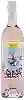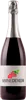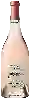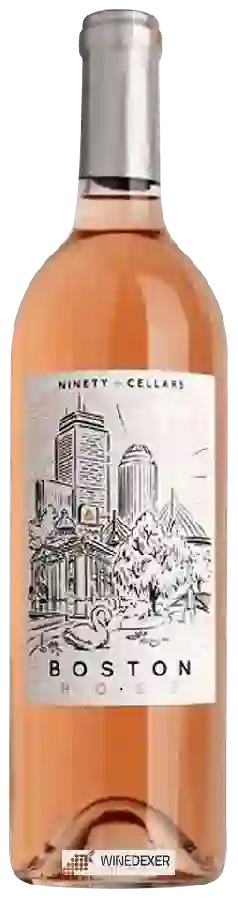
Winery 90+ CellarsBoston Rosé
 Pink wine


In the mouth this pink wine is a with a nice freshness.
This wine generally goes well with vegetarian, appetizers and snacks or lean fish.
Taste structure of the Boston Rosé from the Winery 90+ Cellars
Light | Bold | |
Dry | Sweet | |
Soft | Acidic |
In the mouth the Boston Rosé of Winery 90+ Cellars in the region of Languedoc-Roussillon is a with a nice freshness.
Food and wine pairings with Boston Rosé
Pairings that work perfectly with Boston Rosé



Original food and wine pairings with Boston Rosé


The Boston Rosé of Winery 90+ Cellars matches generally quite well with dishes of pasta, vegetarian or appetizers and snacks such as recipes of capellini with vegetables, quiche with leeks and fresh salmon from flo or fresh sardine rillettes.
Details and technical informations about Winery 90+ Cellars's Boston Rosé.
Discover the grape variety: Noiret
A complex interspecific cross between NY65.0467.08 (NY33277 x chancellor) obtained in 1973 by Bruce Reisch and Thomas Henick Kling of Cornell University at the Geneva/New York Experimental Viticultural Station (United States). It can be found in Canada, Poland, ... in France it is unknown.
Last vintages of this wine

The best vintages of Boston Rosé from Winery 90+ Cellars are 2018, 2017
Informations about the Winery 90+ Cellars
The Winery 90+ Cellars is one of wineries to follow in Languedoc.. It offers 193 wines for sale in the of Languedoc to come and discover on site or to buy online.

The wine region of Languedoc
Languedoc (formerly Coteaux du Languedoc) is a key appellation used in the Languedoc-Roussillon wine region of southern France. It covers Dry table wines of all three colors (red, white and rosé) from the entire region, but leaves Sweet and Sparkling wines to other more specialized appellations. About 75% of all Languedoc wines are red, with the remaining 25% split roughly down the middle between whites and rosés. The appellation covers most of the Languedoc region and almost a third of all the vineyards in France.
The wine region of Languedoc-Roussillon
Languedoc (formerly Coteaux du Languedoc) is a key appellation used in the Languedoc-Roussillon wine region of southern France. It covers Dry table wines of all three colors (red, white and rosé) from the entire region, but leaves Sweet and Sparkling wines to other more specialized appellations. About 75% of all Languedoc wines are red, with the remaining 25% split roughly down the middle between whites and rosés. The appellation covers most of the Languedoc region and almost a third of all the vineyards in France.
The word of the wine: Côte des Blancs
One of the most famous terroirs of the Champagne region, from Épernay to Vertus, mainly devoted to Chardonnay, hence its name. The villages of Chouilly, Cramant, Cuis, Mesnil-sur-Oger, Avize, etc., lying on the chalk, are in a way to Champagne what Meursault, Chablis and Puligny are to Burgundy.