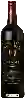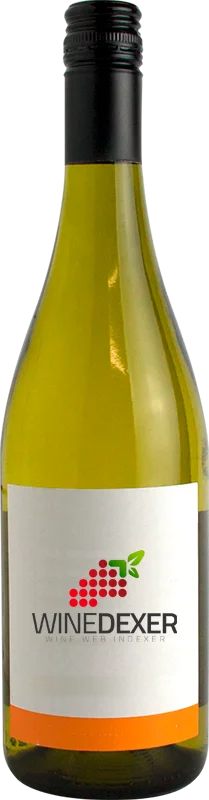
Winery Det Franske VinlagerMarquis De Balsac Vin Blanc
 White wine
In the mouth this white wine is a powerful.
This wine generally goes well with pork, vegetarian or poultry.
Taste structure of the Marquis De Balsac Vin Blanc from the Winery Det Franske Vinlager
Light | Bold | |
Dry | Sweet | |
Soft | Acidic |
In the mouth the Marquis De Balsac Vin Blanc of Winery Det Franske Vinlager in the region of Bordeaux is a powerful.
Food and wine pairings with Marquis De Balsac Vin Blanc
Pairings that work perfectly with Marquis De Balsac Vin Blanc



Original food and wine pairings with Marquis De Balsac Vin Blanc


The Marquis De Balsac Vin Blanc of Winery Det Franske Vinlager matches generally quite well with dishes of pork, vegetarian or poultry such as recipes of oven roasted rabbit that cooks itself!, summer tuna quiche or fish and chips (english batter).
Details and technical informations about Winery Det Franske Vinlager's Marquis De Balsac Vin Blanc.
Discover the grape variety: Ciliegiolo
It is believed to be of Spanish origin. Today it is very present in Tuscany and in many other Italian regions where it is often blended with sangiovese to produce the famous Chianti. According to recent genetic analysis, it is the father of the said sangiovese, its mother being an almost unknown variety called calabrese di Montenuovo. - Synonymy: ciliegino, ciregiuolo or cireguoli, aleatico di spagna (for all the synonyms of the grape varieties, click here!). - Description: medium to large bunches, cylindrical-conical, winged, compact, strong medium-sized stalks with very little lignification; medium-sized, round berries, skin of medium thickness, very bluish-black with sometimes purplish reflections, juicy pulp. - Production potential: buds early in the year, only a few days after Chasselas. It is particularly fond of not too poor hillside soils. Vigorous, productive and regular, it should however be pruned in relation to the fact that its base eyes are not very fertile. Sensitive to wind, mildew, powdery mildew, acid rot and grey rot. Resistant to drought. Ripening 2nd period late. - Wine type/flavours: gives a full and supple wine with soft tannins, rich in alcohol, of a more or less dark ruby colour with in some cases purplish tints. Aromas of cinnamon, cherry, blueberry, spicy notes, plum, fresh grapes, liquorice, tobacco, vanilla, ... .
Informations about the Winery Det Franske Vinlager
The Winery Det Franske Vinlager is one of of the world's greatest estates. It offers 8 wines for sale in the of Bordeaux to come and discover on site or to buy online.

The wine region of Bordeaux
Bordeaux, in southwestern France, is one of the most famous, prestigious and prolific wine regions in the world. The majority of Bordeaux wines (nearly 90% of the production Volume) are the Dry, medium and Full-bodied red Bordeaux blends for which it is famous. The finest (and most expensive) are the wines of the great châteaux of Haut-Médoc and the right bank appellations of Saint-Émilion and Pomerol. The former focuses (at the highest level) on Cabernet Sauvignon, the latter on Merlot.
The word of the wine: Grafting
A method used since the phylloxera crisis, consisting of fixing a graft of local origin on a rootstock resistant to phylloxera.