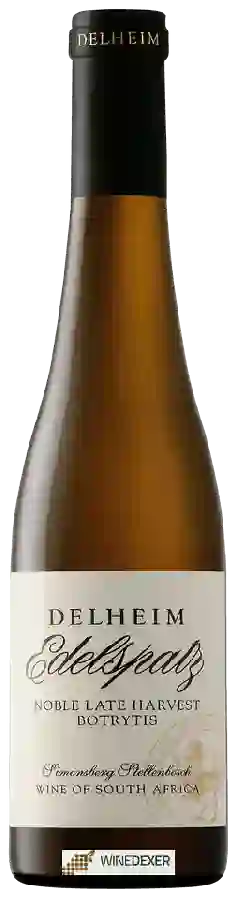
Winery DelheimEdelspatz Noble Late Harvest Botrytis
 Sweet wine


This wine generally goes well with pork, vegetarian or poultry.

Wine flavors and olphactive analysis





On the nose the Edelspatz Noble Late Harvest Botrytis of Winery Delheim in the region of Western Cape often reveals types of flavors of earth, tree fruit or citrus fruit and sometimes also flavors of floral, dried fruit or tropical fruit.
Food and wine pairings with Edelspatz Noble Late Harvest Botrytis
Pairings that work perfectly with Edelspatz Noble Late Harvest Botrytis



Original food and wine pairings with Edelspatz Noble Late Harvest Botrytis



The Edelspatz Noble Late Harvest Botrytis of Winery Delheim matches generally quite well with dishes of pork, rich fish (salmon, tuna etc) or spicy food such as recipes of endives au gratin without béchamel sauce, half-cooked bluefin tuna or honey chicken wok style.
Details and technical informations about Winery Delheim's Edelspatz Noble Late Harvest Botrytis.
Discover the grape variety: Riesling
Crystalline, taut whites with vibrant acidity and aromas of citrus, green apple, white flowers, vineyard peach and mineral/petrol notes with age. Made as dry (Trocken, Alsace), off-dry (Kabinett, Spätlese) and sweet (Auslese, Beerenauslese, Trockenbeerenauslese, late harvest). Star of the Moselle, Rheingau, Alsace AOC and Wachau. Also exported to Clare Valley and Finger Lakes.
Last vintages of this wine
The best vintages of Edelspatz Noble Late Harvest Botrytis from Winery Delheim are 2019, 2018, 2013, 2011 and 2014.
Informations about the Winery Delheim
The Winery Delheim is one of of the world's greatest estates. It offers 45 wines for sale in the of Stellenbosch to come and discover on site or to buy online.

The wine region of Stellenbosch
Showcase of the South African vineyard: signature Cabernet Sauvignon as king red — structured and age-worthy with notes of blackcurrant, blackberry, cedar, tobacco and a menthol touch, firm tannins. Emblematic national Pinotage (created 1925) opulent and smoky (blackberry, coffee, leather). Fleshy Shiraz, supple Merlot as complement. Vibrant Chenin Blanc, ample Chardonnay and lively Sauvignon in whites.
The wine region of Western Cape
Cradle of South African wine. Signature Chenin Blanc (Steen, 20%) in ample, fresh whites with notes of quince, yellow apple, honey and acacia flower, from crisp dry to sweet. Sharp, iodised Sauvignon Blanc (Walker Bay, Constantia), balanced Chardonnay. Reds: emblematic Pinotage with roasted aromas (coffee, plum, smoke), firm Cabernet Sauvignon, spicy Syrah.
The word of the wine: Cinsault
Cinsault is a southern black grape variety that can be found in the blends of most Mediterranean appellations, but most often as an accessory grape variety. It is undoubtedly most present in certain rosé wines (in Corbières, Côtes-de-Provence, etc.): it gives these wines highly appreciated aromas of strawberry, peach and raspberry. In vin de pays (IGP), it is often vinified on its own, usually as a rosé.