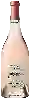
Château de MusLa Source Languedoc Rosé
 Pink wine
In the mouth this pink wine is a powerful.
This wine generally goes well with vegetarian, appetizers and snacks or lean fish.
Taste structure of the La Source Languedoc Rosé from the Château de Mus
Light | Bold | |
Dry | Sweet | |
Soft | Acidic |
In the mouth the La Source Languedoc Rosé of Château de Mus in the region of Languedoc-Roussillon is a powerful.
Food and wine pairings with La Source Languedoc Rosé
Pairings that work perfectly with La Source Languedoc Rosé



Original food and wine pairings with La Source Languedoc Rosé


The La Source Languedoc Rosé of Château de Mus matches generally quite well with dishes of pasta, vegetarian or appetizers and snacks such as recipes of zucchini and goat cheese lasagna, zucchini quiche or aperitif puff pastries with vire andouille sausage.
Details and technical informations about Château de Mus's La Source Languedoc Rosé.
Discover the grape variety: Scarlotta seedless
Intraspecific cross between sun world.seedling 89345-090-144 and sun world seedling 89361-091-364 obtained in California (USA) by Cain David Wayne from Sun World International Inc. Not known in France, we can meet it in England, in Spain, in Chile, ... . It should be of interest to amateur gardeners.
Informations about the Château de Mus
The Château de Mus is one of of the world's greatest estates. It offers 17 wines for sale in the of Languedoc to come and discover on site or to buy online.

The wine region of Languedoc
Languedoc (formerly Coteaux du Languedoc) is a key appellation used in the Languedoc-Roussillon wine region of southern France. It covers Dry table wines of all three colors (red, white and rosé) from the entire region, but leaves Sweet and Sparkling wines to other more specialized appellations. About 75% of all Languedoc wines are red, with the remaining 25% split roughly down the middle between whites and rosés. The appellation covers most of the Languedoc region and almost a third of all the vineyards in France.
The wine region of Languedoc-Roussillon
Languedoc (formerly Coteaux du Languedoc) is a key appellation used in the Languedoc-Roussillon wine region of southern France. It covers Dry table wines of all three colors (red, white and rosé) from the entire region, but leaves Sweet and Sparkling wines to other more specialized appellations. About 75% of all Languedoc wines are red, with the remaining 25% split roughly down the middle between whites and rosés. The appellation covers most of the Languedoc region and almost a third of all the vineyards in France.
The word of the wine: Cellar
A place for storing and ageing wines in bottles. This term designates both the cellar of a private individual and that of a restaurant. It is also a store dedicated to the retail sale of wine.