The Domaine de la Plaigne of Beaujolais
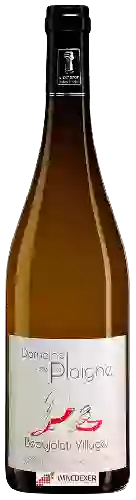
The Domaine de la Plaigne is one of the best wineries to follow in Beaujolais.. It offers 12 wines for sale in of Beaujolais to come and discover on site or to buy online.

Looking for the best Domaine de la Plaigne wines in Beaujolais among all the wines in the region? Check out our tops of the best red, white or effervescent Domaine de la Plaigne wines. Also find some food and wine pairings that may be suitable with the wines from this area. Learn more about the region and the Domaine de la Plaigne wines with technical and enological descriptions.
How Domaine de la Plaigne wines pair with each other generally quite well with dishes of pasta, rich fish (salmon, tuna etc) or shellfish such as recipes of tagliatelle with foie gras, tuna gratin or pike quenelles with lobster bisque sauce.
On the nose the white wine of Domaine de la Plaigne. often reveals types of flavors of red fruit.
Beaujolais is an important wine region in eastern France, famous for its vibrant, Fruity red wines made from Gamay. It is located immediately South of Burgundy, of which it is sometimes considered a Part, although it is in the administrative region of Rhône. The extensive plantings of Gamay in this region make Beaujolais one of the few regions in the world that is so concentrated on a single Grape variety. Pinot Noir is used in small quantities in red and rosé wines, but in the name of regional identity, it is being phased out and will only be allowed until the 2015 harvest.
Although best known for its red wines, the region also produces white Beaujolais Blanc, from Chardonnay and Aligote. These two white wine varieties are also sometimes used in local red wines, in which they can make up to 15% of the Final blend. There are several forms of Beaujolais red wine: standard Beaujolais (including Beaujolais Supérieur), Beaujolais Villages and the Young, characterful Beaujolais Nouveau. The highest quality wines of the region are those of the ten Beaujolais crus - ten wine regions Long recognized as the best in the region.
How Domaine de la Plaigne wines pair with each other generally quite well with dishes of pasta, veal or pork such as recipes of chinese noodles with vegetables, chicken and sausage stew with carrots or rabbit with hunter's sauce.
On the nose the red wine of Domaine de la Plaigne. often reveals types of flavors of red fruit, raspberry or chocolate and sometimes also flavors of oak, non oak or earth. In the mouth the red wine of Domaine de la Plaigne. is a with a nice freshness.
The white Chardonnay is a grape variety that originated in France (Burgundy). It produces a variety of grape specially used for wine making. It is rare to find this grape to eat on our tables. This variety of grape is characterized by small bunches, and small grapes. White Chardonnay can be found in many vineyards: South West, Burgundy, Jura, Languedoc & Roussillon, Cognac, Bordeaux, Beaujolais, Savoie & Bugey, Loire Valley, Champagne, Rhone Valley, Armagnac, Lorraine, Alsace, Provence & Corsica.
How Domaine de la Plaigne wines pair with each other generally quite well with dishes of beef such as recipes of homemade italian lasagna.
Selection of noble grains. Appellation reserved for a type of sweet wine produced in Alsace.
How Domaine de la Plaigne wines pair with each other generally quite well with dishes of beef such as recipes of monkfish tail with white butter.
A very old variety cultivated in Greece, even today, especially in the Peloponnese region. It belongs to a large family called fileri or phileri, and the differences between the clones are sometimes quite marked. In France, it is almost unknown - however, it is registered in the Official Catalogue of wine grape varieties, list A1 - and plantations have been attempted in the United States, ... .
Planning a wine route in the of Beaujolais? Here are the wineries to visit and the winemakers to meet during your trip in search of wines similar to Domaine de la Plaigne.
American, was widely planted in the first half of the 19th century, particularly in the northern part of the United States. Discovered in 1819, it is the result of an interspecific cross between Vitis Labrusca Linné and Semillon (F. Huber 2016). It can still be found in the United States (New York, Ohio, etc.), Canada (Ontario), Brazil, South Africa, England, etc. In France, it is almost unknown. Note that the Catawba is also related to the concord.