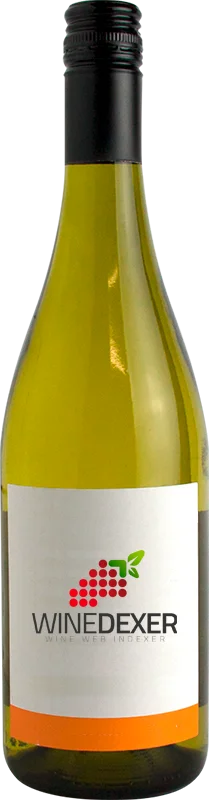
Winery Emmerich-KoebernikSilvaner Trocken
 White wine
In the mouth this white wine is a with a nice freshness.
This wine generally goes well with pork, vegetarian or poultry.
Taste structure of the Silvaner Trocken from the Winery Emmerich-Koebernik
Light | Bold | |
Dry | Sweet | |
Soft | Acidic |
In the mouth the Silvaner Trocken of Winery Emmerich-Koebernik in the region of Nahe is a with a nice freshness.
Food and wine pairings with Silvaner Trocken
Pairings that work perfectly with Silvaner Trocken



Original food and wine pairings with Silvaner Trocken


The Silvaner Trocken of Winery Emmerich-Koebernik matches generally quite well with dishes of veal, pork or vegetarian such as recipes of meatballs catalan style, cabbage casserole or nanie's diced ham quiche.
Details and technical informations about Winery Emmerich-Koebernik's Silvaner Trocken.
Discover the grape variety: Fantasy seedless
Cross between B36-27 and P64-18 obtained in the United States (California) by David Wilder Ramming and Ronald Tarailo and where it is cultivated since 1994. The slightly foxed taste of its flesh makes us think that there was an intervention of a direct producer hybrid itself with a foxed taste.
Informations about the Winery Emmerich-Koebernik
The Winery Emmerich-Koebernik is one of of the world's great estates. It offers 30 wines for sale in the of Nahe to come and discover on site or to buy online.

The wine region of Nahe
Nahe is one of the smaller German wine regions, named after the Nahe river which joins the Rhein at Rheinhessen/bingen">Bingen. The viticultural carea here is characterised by dramatic topography with steep slopes and craggy outcrops of metamorphic rock. Like most of the regions on or near the Rhine, its most prestigious wines are made from Riesling. There are around 4,000 hectares (10,000 acres) of Vineyards, spread across seven Grosslagen (wine districts) and over 300 Einzellagen (individual vineyard sites).
The word of the wine: Biodynamics
Biodynamic farming method initiated by Rudolf Steiner which forbids all chemical treatments based on synthetic products. Biodynamics is based on the interaction between the movements of the planets and the development of plants and uses preparations based on organic and mineral materials.