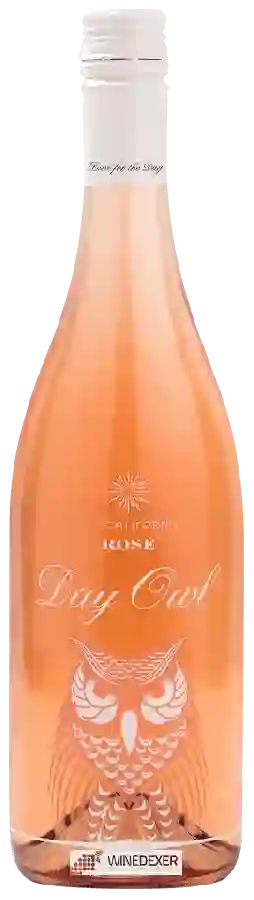
Winery Day OwlRosé
 Pink wine


This wine generally goes well with pork, poultry or mild and soft cheese.
The Rosé of the Winery Day Owl is in the top 5 of wines of California.
Wine flavors and olphactive analysis






On the nose the Rosé of Winery Day Owl in the region of California often reveals types of flavors of non oak, earth or microbio and sometimes also flavors of vegetal, oak or tree fruit.
Food and wine pairings with Rosé
Pairings that work perfectly with Rosé



Original food and wine pairings with Rosé

The Rosé of Winery Day Owl matches generally quite well with dishes of pork, spicy food or poultry such as recipes of wild boar bourguignon, traditional tunisian couscous or butter chicken or chicken makkhani (india).
Details and technical informations about Winery Day Owl's Rosé.
Discover the grape variety: Penouille
An ancient grape variety from the southwest of France that used to be found in the Bordeaux region and in the vineyards of Fronton (Haute Garonne). Today, it is in the process of disappearing.
Last vintages of this wine

The best vintages of Rosé from Winery Day Owl are 2019, 2018, 2016, 0 and 2017.
Informations about the Winery Day Owl
The Winery Day Owl is one of of the world's greatest estates. It offers 1 wines for sale in the of California to come and discover on site or to buy online.

The wine region of California
California is the largest and most important wine region in the United States. It represents the southern two-thirds (850 miles or 1,370 kilometers) of the country's west coast. (Oregon and Washington make up the rest. ) The state also spans nearly 10 degrees of latitude.
The word of the wine: Body (having)
Wine, dense and rich in alcohol.