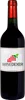
Winery Daniel BessièreCollection Fitou
 Red wine
This wine generally goes well with beef, veal or pasta.
Food and wine pairings with Collection Fitou
Pairings that work perfectly with Collection Fitou



Original food and wine pairings with Collection Fitou
The Collection Fitou of Winery Daniel Bessière matches generally quite well with dishes of beef, pasta or veal such as recipes of thai beef skewers, ham lasagness or puchero.
Details and technical informations about Winery Daniel Bessière's Collection Fitou.
Discover the grape variety: Couderc 4401
An interspecific cross made in 1884 by Georges Couderc (1850-1928) between chasselas rose and rupestris. This direct-producing hybrid was multiplied much more in the south-west of France and in the Loire Valley, and in some cases was even used as rootstock. François Baco (1865-1947) and Vincent Malègue (1830-1915) also used it as a progenitor. - Synonymy: red bird, tank, Terray hybrid, malafosse, oazo rukh, sakhotin (for all the grape variety synonyms, click here!). - Description: small to medium-sized bunches, cylindrical-conical, winged, more or less compact, sometimes with small green berries, medium-sized stalks remaining green when ripe; small, spherical berries, beautiful bluish-black skin, very pruinose, pulpy, with coloured juice.
Informations about the Winery Daniel Bessière
The Winery Daniel Bessière is one of wineries to follow in Fitou.. It offers 53 wines for sale in the of Fitou to come and discover on site or to buy online.

The wine region of Fitou
Fitou is a red wine appellation in the heart of the Languedoc-Roussillon wine region in southern France. The wine takes its name from a small Village located a few kilometres from the Mediterranean coast. The typical Fitou wine is not dissimilar to the reds produced in the neighbouring Corbières (i. e.
The wine region of Languedoc-Roussillon
Languedoc (formerly Coteaux du Languedoc) is a key appellation used in the Languedoc-Roussillon wine region of southern France. It covers Dry table wines of all three colors (red, white and rosé) from the entire region, but leaves Sweet and Sparkling wines to other more specialized appellations. About 75% of all Languedoc wines are red, with the remaining 25% split roughly down the middle between whites and rosés. The appellation covers most of the Languedoc region and almost a third of all the vineyards in France.
The word of the wine: VDN
Natural sweet wine. Wine obtained by mutage of the must during fermentation by adding over-finished alcohol at 96 °, produced in the vineyards of Roussillon, Languedoc, Rhone Valley and Corsica.