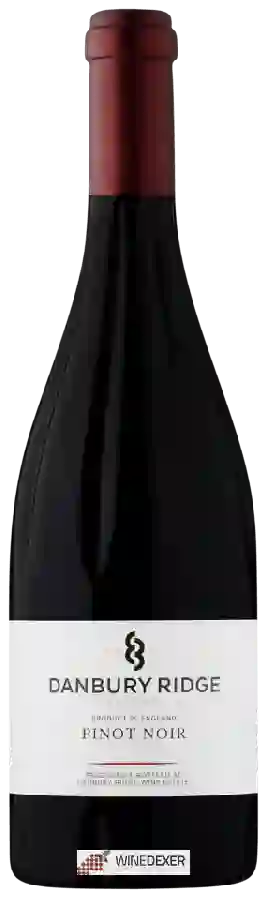
Winery Danbury RidgePinot Noir
 Red wine


This wine generally goes well with pork, poultry or veal.

Wine flavors and olphactive analysis



On the nose the Pinot Noir of Winery Danbury Ridge in the region of England often reveals types of flavors of non oak, oak or spices and sometimes also flavors of red fruit, black fruit.
Food and wine pairings with Pinot Noir
Pairings that work perfectly with Pinot Noir



Original food and wine pairings with Pinot Noir


The Pinot Noir of Winery Danbury Ridge matches generally quite well with dishes of veal, pork or game (deer, venison) such as recipes of bites of cheese, the real vegetables stuffed in the provençal way or duck legs with green olives.
Details and technical informations about Winery Danbury Ridge's Pinot Noir.
Discover the grape variety: Pinot noir
Elegant reds, light in colour with silky tannins, showing strawberry, cherry and raspberry aromas, evolving to forest floor, mushroom and spice with age. Fresh acidity, delicate finish. Star of the Côte d'Or (Romanée-Conti, Chambertin, Volnay), pillar of Champagne (Blanc de Noirs) and signature of Oregon, Central Otago and Sonoma Coast. An early-ripening Burgundian variety, one of the world's greatest.
Last vintages of this wine
The best vintages of Pinot Noir from Winery Danbury Ridge are 0, 2018
Informations about the Winery Danbury Ridge
The Winery Danbury Ridge is one of of the world's greatest estates. It offers 4 wines for sale in the of England to come and discover on site or to buy online.

The wine region of England
Quality renaissance of English wine, signature in traditional-method sparklers. On chalk soils identical to Champagne's (South-East), fine, taut bubbles with signature notes of green apple, lemon, white flowers, brioche and chalk, the vivid acidity of a cool climate. Based on Chardonnay, Pinot Noir and Meunier. Still wines a minority: aromatic Bacchus (elderflower, cut grass — the English identity), fresh Pinot Noir.
The word of the wine: Extraction
All the methods (pumping over, punching down) that allow the colour and tannins to be extracted from the grape skin during maceration, before fermentation begins. It is also possible to macerate after fermentation, but gently, so as not to extract the tannins from the seeds, which are greener. Because of its solvent power, alcohol favours extraction.