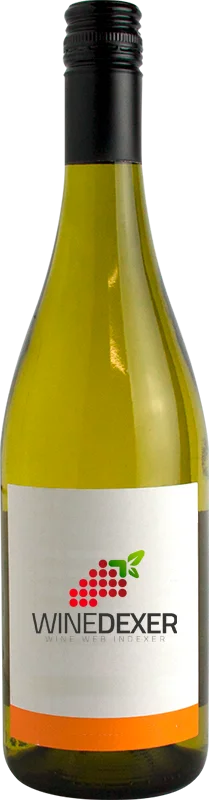
Winery Dalfiume NobilviniTrebbiano
 White wine


In the mouth this white wine is a powerful with a nice freshness.
This wine generally goes well with lean fish, shellfish or mature and hard cheese.
Taste structure of the Trebbiano from the Winery Dalfiume Nobilvini
Light | Bold | |
Dry | Sweet | |
Soft | Acidic |
In the mouth the Trebbiano of Winery Dalfiume Nobilvini in the region of Emilia-Romagna is a powerful with a nice freshness.
Food and wine pairings with Trebbiano
Pairings that work perfectly with Trebbiano



Original food and wine pairings with Trebbiano


The Trebbiano of Winery Dalfiume Nobilvini matches generally quite well with dishes of pasta, shellfish or mature and hard cheese such as recipes of awara broth, mussels with cream supers or chicken gaston gérard style.
Details and technical informations about Winery Dalfiume Nobilvini's Trebbiano.
Discover the grape variety: Ciliegiolo
It is believed to be of Spanish origin. Today it is very present in Tuscany and in many other Italian regions where it is often blended with sangiovese to produce the famous Chianti. According to recent genetic analysis, it is the father of the said sangiovese, its mother being an almost unknown variety called calabrese di Montenuovo. - Synonymy: ciliegino, ciregiuolo or cireguoli, aleatico di spagna (for all the synonyms of the grape varieties, click here!). - Description: medium to large bunches, cylindrical-conical, winged, compact, strong medium-sized stalks with very little lignification; medium-sized, round berries, skin of medium thickness, very bluish-black with sometimes purplish reflections, juicy pulp. - Production potential: buds early in the year, only a few days after Chasselas. It is particularly fond of not too poor hillside soils. Vigorous, productive and regular, it should however be pruned in relation to the fact that its base eyes are not very fertile. Sensitive to wind, mildew, powdery mildew, acid rot and grey rot. Resistant to drought. Ripening 2nd period late. - Wine type/flavours: gives a full and supple wine with soft tannins, rich in alcohol, of a more or less dark ruby colour with in some cases purplish tints. Aromas of cinnamon, cherry, blueberry, spicy notes, plum, fresh grapes, liquorice, tobacco, vanilla, ... .
Last vintages of this wine
The best vintages of Trebbiano from Winery Dalfiume Nobilvini are 2019, 0
Informations about the Winery Dalfiume Nobilvini
The Winery Dalfiume Nobilvini is one of of the world's great estates. It offers 24 wines for sale in the of Rubicone to come and discover on site or to buy online.

The wine region of Rubicone
The wine region of Rubicone is located in the region of Emilia of Émilie-Romagne of Italy. Wineries and vineyards like the Domaine Biscardo or the Domaine Umberto Cesari produce mainly wines red, white and sparkling. The most planted grape varieties in the region of Rubicone are Sangiovese, Merlot and Chardonnay, they are then used in wines in blends or as a single variety. On the nose of Rubicone often reveals types of flavors of cherry, mocha or butter and sometimes also flavors of blueberry, minerality or red fruit.
The wine region of Emilia-Romagna
Romagna/emilia">Emilia-Romagna is a Rich and fertile region in Northern Italy, and one of the country's most prolific wine-producing regions, with over 58,000 hectares (143,320 acres) of vines in 2010. It is 240 kilometers (150 miles) wide and stretches across almost the entire northern Italian peninsula, sandwiched between Tuscany to the South, Lombardy and Veneto to the north and the Adriatic Sea to the east. Nine miles of Liguria is all that separates Emilia-Romagna from the Ligurian Sea, and its uniqueness as the only Italian region with both an east and west coast. Emilia-Romagna's wine-growing heritage dates back to the seventh century BC, making it one of the oldest wine-growing regions in Italy.
The word of the wine: Maturation
Transformation undergone by the grape when it is enriched with sugar and loses some of its acidity to reach maturity.