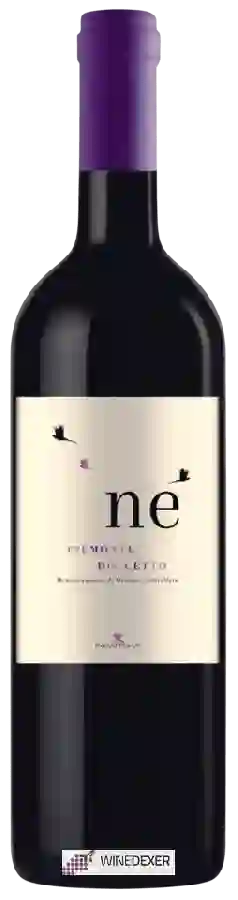
Winery DacastelloDolcetto
 Red wine


In the mouth this red wine is a powerful.
This wine generally goes well with beef, game (deer, venison) or lamb.
Taste structure of the Dolcetto from the Winery Dacastello
Light | Bold | |
Smooth | Tannic | |
Dry | Sweet | |
Soft | Acidic |
In the mouth the Dolcetto of Winery Dacastello in the region of Piedmont is a powerful.
Food and wine pairings with Dolcetto
Pairings that work perfectly with Dolcetto



Original food and wine pairings with Dolcetto

The Dolcetto of Winery Dacastello matches generally quite well with dishes of beef, pasta or lamb such as recipes of sloth pork loin, tagliatelle with shrimps or baked lamb neck on a bed of vegetables and grapes.
Details and technical informations about Winery Dacastello's Dolcetto.
Discover the grape variety: Morescono
Most certainly Italian, genetic analysis has confirmed that it is the variety known as nieddu mannu. It can be found in Corsica and Italy (Sardinia). It is registered in the Official Catalogue of Vat Varieties list A1. However, it should not be confused with morescola, also grown in Corsica, which is none other than aubun and muristellu, one of the synonyms of morrastel.
Last vintages of this wine

The best vintages of Dolcetto from Winery Dacastello are 0, 2018
Informations about the Winery Dacastello
The Winery Dacastello is one of of the world's great estates. It offers 129 wines for sale in the of Piedmont to come and discover on site or to buy online.

The wine region of Piedmont
Piedmont (Piemonte) holds an unrivalled place among the world's finest wine regions. Located in northwestern Italy, it is home to more DOCG wines than any other Italian region, including such well-known and respected names as Barolo, Barbaresco and Barbera d'Asti. Though famous for its Austere, Tannic, Floral">floral reds made from Nebbiolo, Piedmont's biggest success story in the past decade has been Moscato d'Asti, a Sweet, Sparkling white wine. Piedmont Lies, as its name suggests, at the foot of the Western Alps, which encircle its northern and western sides and form its naturally formidable border with Provence, France.
The word of the wine: Wrapped
Said of a wine rich in alcohol, but in which the mellowness dominates.