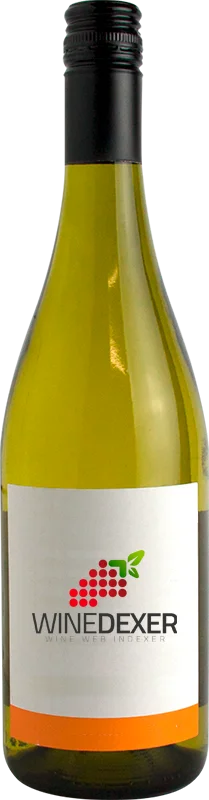
Winery Vinarstvi NechoryVeltlínské Zelené Suché
 White wine


This wine generally goes well with pork, vegetarian or lean fish.

Food and wine pairings with Veltlínské Zelené Suché
Pairings that work perfectly with Veltlínské Zelené Suché



Original food and wine pairings with Veltlínské Zelené Suché



The Veltlínské Zelené Suché of Winery Vinarstvi Nechory matches generally quite well with dishes of pork, rich fish (salmon, tuna etc) or shellfish such as recipes of ham and cheese macaroni gratin, fish balls or mussels with rosemary and barbecue.
Details and technical informations about Winery Vinarstvi Nechory's Veltlínské Zelené Suché.
Discover the grape variety: Cabernet-Cantor
Colourful and simply fruity reds with a deep purple hue, supple tannins and an ample palate with preserved acidity, featuring signature aromas of black fruits (blackcurrant, blackberry), green pepper and herbaceous notes reminiscent of Cabernet. Productive and resistant. Grown in Germany, Belgium and the United Kingdom for northern organic vineyards. German black hybrid grape obtained in 1987 at Geilweilerhof, a disease-resistant crossing involving Cabernet Sauvignon.
Last vintages of this wine
The best vintages of Veltlínské Zelené Suché from Winery Vinarstvi Nechory are 0
Informations about the Winery Vinarstvi Nechory
The Winery Vinarstvi Nechory is one of of the world's greatest estates. It offers 18 wines for sale in the of Morava to come and discover on site or to buy online.

The wine region of Morava
Predominantly white region, lively and mineral: crisp, peppery Grüner Veltliner, taut Riesling with citrus, supple, floral Müller-Thurgau, aromatic Pálava, the local signature (muscat, white flowers). More discreet reds: spicy Frankovka (Blaufränkisch) with black fruits, fine, silky Saint Laurent. Temperate continental climate, 4 sub-regions: Mikulov, Velké Pavlovice, Znojmo, Slovácko. ~96% of the Czech vineyard, 73 grapes grown.
The word of the wine: Bâtonnage
A very old technique that has come back into fashion in modern oenology, which consists of shaking the white wine in the barrels at the end of fermentation, or after fermentation, with a stick or a flail, in order to suspend the fine lees composed of yeasts at the end of their activity. This process is sometimes used for red wines.