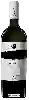
Winery Costantini AntonioPasserina
 White wine
In the mouth this white wine is a powerful.
This wine generally goes well with vegetarian, appetizers and snacks or shellfish.
Taste structure of the Passerina from the Winery Costantini Antonio
Light | Bold | |
Dry | Sweet | |
Soft | Acidic |
In the mouth the Passerina of Winery Costantini Antonio in the region of Abruzzo is a powerful.
Food and wine pairings with Passerina
Pairings that work perfectly with Passerina



Original food and wine pairings with Passerina
The Passerina of Winery Costantini Antonio matches generally quite well with dishes of shellfish, vegetarian or appetizers and snacks such as recipes of mussels with roquefort cheese, nanie's diced ham quiche or happy new year bites.
Details and technical informations about Winery Costantini Antonio's Passerina.
Discover the grape variety: Arandell
An interspecific cross between NY88.0514.0184 and NY84.0101.03 obtained in 1995 by Bruce Reisch at the Experimental Station of Cornell University in Geneva (United States). It is found in some American wine regions, interesting for its resistance to the main cryptogamic diseases and for its wine in particular in the production of original rosés. In France, it is almost unknown.
Informations about the Winery Costantini Antonio
The Winery Costantini Antonio is one of of the world's great estates. It offers 17 wines for sale in the of Abruzzo to come and discover on site or to buy online.

The wine region of Abruzzo
Abruzzo is an Italian wine region located on the eastern (Adriatic) coast. Its immediate neighbors in CentralItaly are Marche to the North, Lazio to the west and southwest and Molise to the southeast. Abruzzo has one DOCG - Montepulciano d'Abruzzo Colline Teramane - and three DOC wine appellations. The reds and Cerasuolo d'Abruzzo and Montepulciano d'Abruzzo, as well as the white wine appellation Trebbiano d'Abruzzo are the most notable, followed by the lesser-known Controguerra.
The word of the wine: Stirring
In the traditional method, the operation aims to bring the deposits against the cork by the movement of the bottles placed on desks. The stirring can be manual or mechanical (using gyropalettes).