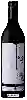
Winery Corte SacconeNero d'Arcole
 Red wine



In the mouth this red wine is a powerful.
This wine generally goes well with beef, game (deer, venison) or lamb.
Taste structure of the Nero d'Arcole from the Winery Corte Saccone
Light | Bold | |
Smooth | Tannic | |
Dry | Sweet | |
Soft | Acidic |
In the mouth the Nero d'Arcole of Winery Corte Saccone in the region of Veneto is a powerful.
Food and wine pairings with Nero d'Arcole
Pairings that work perfectly with Nero d'Arcole



Original food and wine pairings with Nero d'Arcole

The Nero d'Arcole of Winery Corte Saccone matches generally quite well with dishes of beef, pasta or lamb such as recipes of sautéed pork with pineapple, spaghetti with summer vegetables or pasta with merguez.
Details and technical informations about Winery Corte Saccone's Nero d'Arcole.
Discover the grape variety: Cornalin du Valais
Very old vine cultivated in the Swiss Valais, resulting from a natural crossing between the petit rouge(*) and the mayolet. It is the father of red humagne, also called cornalin d'Aoste, the grandfather of durize or petit rouge du Valais or rouge de Fully and a relative of goron. - Synonymy: old red of Valais, red of the country in Switzerland, landroter (for all the synonyms of the grape varieties, click here!). - Description: medium-sized bunches, cylindrical, winged, compact, strong medium-sized peduncles with little lignification; medium-sized berries, spherical or short elliptical, skin of a beautiful bluish black colour with a lot of bloom. The foliage turns completely red in the fall. - Production potential: early budding in the year. Capricious and difficult variety. Particularly likes the limestone soils of well exposed hillsides that warm up quickly enough, lean and well drained. Semi-erect bearing, vigorous with irregular production. Resists well to winter frosts. Susceptible to the main diseases, especially to oidium and grey rot. Also susceptible to magnesium deficiency and stalk dehydration. Maturity: 3rd early season
Last vintages of this wine
The best vintages of Nero d'Arcole from Winery Corte Saccone are 2009, 0
Informations about the Winery Corte Saccone
The Winery Corte Saccone is one of of the world's greatest estates. It offers 4 wines for sale in the of Veneto to come and discover on site or to buy online.

The wine region of Veneto
Veneto is an important and growing wine region in northeastern Italy. Veneto is administratively Part of the Triveneto area, aLong with its smaller neighbors, Trentino-Alto Adige and Friuli-Venezia Giulia. In terms of geography, culture and wine styles, it represents a transition from the Alpine and Germanic-Slavic end of Italy to the warmer, drier, more Roman lands to the South. Veneto is slightly smaller than the other major Italian wine regions - Piedmont, Tuscany, Lombardy, Puglia and Sicily - but it produces more wine than any of them.
The word of the wine: Claret
Name given by the English to the red wine of Bordeaux.