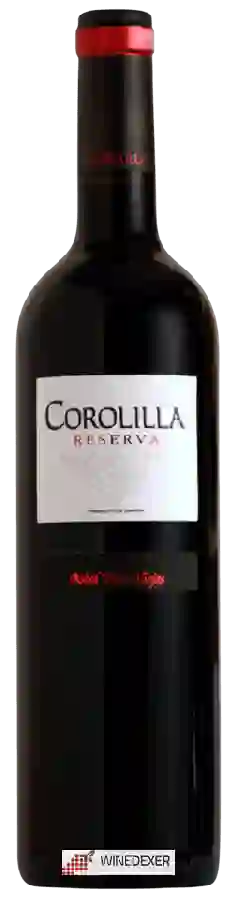
Winery CorolillaBobal Vĩnas Crianza
 Red wine



In the mouth this red wine is a powerful with a lot of tannins present in the mouth.
This wine generally goes well with poultry, beef or veal.

Taste structure of the Bobal Vĩnas Crianza from the Winery Corolilla
Light | Bold | |
Smooth | Tannic | |
Dry | Sweet | |
Soft | Acidic |
In the mouth the Bobal Vĩnas Crianza of Winery Corolilla in the region of Valence is a powerful with a lot of tannins present in the mouth.
Food and wine pairings with Bobal Vĩnas Crianza
Pairings that work perfectly with Bobal Vĩnas Crianza



Original food and wine pairings with Bobal Vĩnas Crianza

The Bobal Vĩnas Crianza of Winery Corolilla matches generally quite well with dishes of beef, pasta or veal such as recipes of sloth pork loin, spaghetti cacio e pepe or roast veal grand-mère madou.
Details and technical informations about Winery Corolilla's Bobal Vĩnas Crianza.
Discover the grape variety: Bobal
Intensely coloured, structured reds with an inky robe and tight tannins, featuring aromas of blackberry, black plum, black cherry, spices, liquorice and balsamic notes. High acidity and good ageing potential in old vines. The absolute star of Utiel-Requena DO (Valencia province) where it is experiencing a marked qualitative revival, also made as typey Clarete rosés and modern ageing cuvées. Also in Manchuela DO and Ribera del Júcar DO. Native Levantine grape.
Last vintages of this wine
The best vintages of Bobal Vĩnas Crianza from Winery Corolilla are 2010, 0, 2012, 2011
Informations about the Winery Corolilla
The Winery Corolilla is one of of the world's greatest estates. It offers 3 wines for sale in the of Valence to come and discover on site or to buy online.

The wine region of Valence
Sunny Mediterranean Levant, sun-drenched accessible wines. Monastrell (Mourvèdre) star red in Alicante: fleshy and deep with black fruits, garrigue, leather and spice, firm tannins. Round, fruity Bobal from Utiel-Requena, supple Garnacha, juicy Tempranillo. Fresh whites: light Merseguera, aromatic Moscatel (fresh grape, flowers).
The word of the wine: pH
Short for "hydrogen potential", the pH is a parameter that defines whether a medium is acidic or basic. A high pH gives a soft wine, a very low pH translates into a wine that is too acidic.


