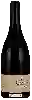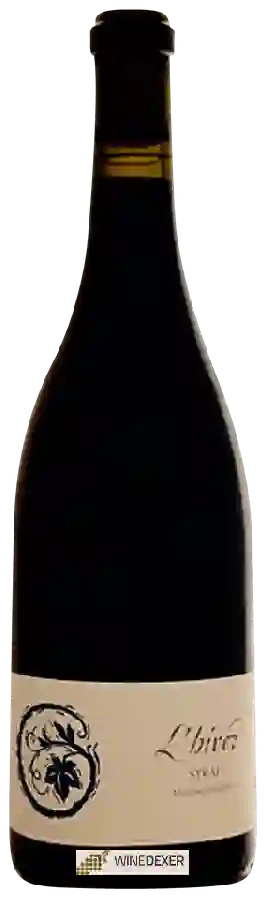
Winery CopainL'Hiver Syrah
 Red wine



In the mouth this red wine is a powerful with a lot of tannins present in the mouth.
This wine generally goes well with poultry, beef or game (deer, venison).

Taste structure of the L'Hiver Syrah from the Winery Copain
Light | Bold | |
Smooth | Tannic | |
Dry | Sweet | |
Soft | Acidic |
In the mouth the L'Hiver Syrah of Winery Copain in the region of California is a powerful with a lot of tannins present in the mouth.
Wine flavors and olphactive analysis

Food and wine pairings with L'Hiver Syrah
Pairings that work perfectly with L'Hiver Syrah



Original food and wine pairings with L'Hiver Syrah

The L'Hiver Syrah of Winery Copain matches generally quite well with dishes of beef, lamb or game (deer, venison) such as recipes of oxtail and carrot stew, sauté of lamb or rabbit with mustard, thyme and cream.
Details and technical informations about Winery Copain's L'Hiver Syrah.
Discover the grape variety: Moscatello Selvatico
Aromatic and structured muscat whites with a pale golden robe, an ample and perfumed palate with preserved acidity, showing powerful muscat signature aromas (rose, fresh grape), white flowers (orange blossom), exotic fruits (lychee), honey and Apulian notes. Intense southern profile. Grown mainly in the province of Bari, featured in aromatic Apulian blends dry or sweet. Native white Italian grape from Apulia, probable parent of Moscato di Alessandria.
Last vintages of this wine
The best vintages of L'Hiver Syrah from Winery Copain are 2008, 0
Informations about the Winery Copain
The Winery Copain is one of of the world's great estates. It offers 69 wines for sale in the of California to come and discover on site or to buy online.

The wine region of California
Powerful, sunny reds: dense Napa Cabernet Sauvignon (blackcurrant, chocolate, tobacco, ample tannins), spicy, jammy Zinfandel from the Sierra Foothills, silky red-fruited Pinot Noir on the cool coast (Sonoma, Russian River, Central Coast). Opulent, buttery Chardonnay, notes of yellow fruit and vanilla. Varied climate, from the hot interior to the Pacific-cooled coast. 80% of US production, 139 AVAs including Napa (1st AVA, 1981).
The word of the wine: Draft liquor (champagne)
After blending, the wine is bottled with a liqueur de tirage (a mixture of sugar and wine) and a yeast (selected yeasts). The yeast attacks the sugar and creates carbon dioxide. The fermentation, which lasts about two months, is prolonged by an ageing period (15 months minimum in total). The bottle is capped (some rare vintages are capped with a staple and a cork).