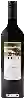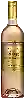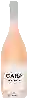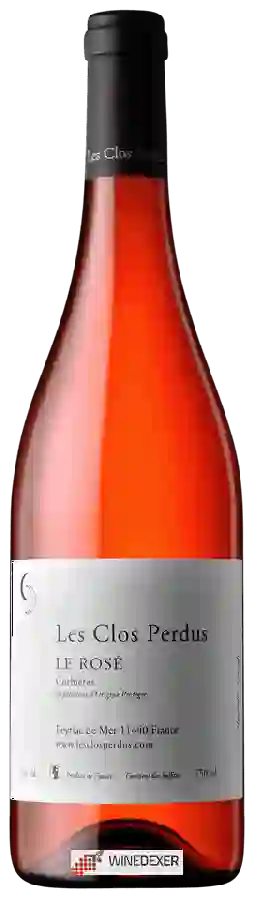
Les Clos PerdusLe Rosè Corbières
 Pink wine



In the mouth this pink wine is a powerful with a nice freshness.
This wine generally goes well with vegetarian, appetizers and snacks or lean fish.
Taste structure of the Le Rosè Corbières from the Les Clos Perdus
Light | Bold | |
Dry | Sweet | |
Soft | Acidic |
In the mouth the Le Rosè Corbières of Les Clos Perdus in the region of Languedoc-Roussillon is a powerful with a nice freshness.
Wine flavors and olphactive analysis




On the nose the Le Rosè Corbières of Les Clos Perdus in the region of Languedoc-Roussillon often reveals types of flavors of strawberries, earth or red fruit.
Food and wine pairings with Le Rosè Corbières
Pairings that work perfectly with Le Rosè Corbières



Original food and wine pairings with Le Rosè Corbières


The Le Rosè Corbières of Les Clos Perdus matches generally quite well with dishes of pasta, vegetarian or appetizers and snacks such as recipes of pho ga (vietnamese chicken soup), quiche without pastry or pretzels (alsace).
Details and technical informations about Les Clos Perdus's Le Rosè Corbières.
Discover the grape variety: Mourvèdre
Mourvèdre noir is a grape variety originating from Spain. It produces a variety of grape specially used for wine making. It is rare to find this grape to eat on our tables. This variety of grape is characterized by medium to large bunches, and grapes of medium size. Mourvèdre noir can be found in several vineyards: South-West, Cognac, Bordeaux, Provence & Corsica, Rhône valley, Languedoc & Roussillon, Loire valley, Savoie & Bugey, Beaujolais.
Last vintages of this wine
The best vintages of Le Rosè Corbières from Les Clos Perdus are 2014
Informations about the Les Clos Perdus
The Les Clos Perdus is one of of the world's greatest estates. It offers 14 wines for sale in the of Corbières to come and discover on site or to buy online.

The wine region of Corbières
Corbières is an important appellation in the Languedoc-roussillon">Languedoc-Roussillon region of southern France. It is one of the best known and most productive appellations in the Languedoc. The Corbières vineyards produce large quantities of red and rosé wines, as well as a growing number of white wines. The reds are the strongest Part of the appellation; they are reputedly Rich and herbal, made from Grenache, Syrah, Mourvèdre, Lledoner Pelut and Carignan.
The wine region of Languedoc-Roussillon
Languedoc (formerly Coteaux du Languedoc) is a key appellation used in the Languedoc-Roussillon wine region of southern France. It covers Dry table wines of all three colors (red, white and rosé) from the entire region, but leaves Sweet and Sparkling wines to other more specialized appellations. About 75% of all Languedoc wines are red, with the remaining 25% split roughly down the middle between whites and rosés. The appellation covers most of the Languedoc region and almost a third of all the vineyards in France.
The word of the wine: Size (champagne)
Juices that flow from the press after the cuvée, at the second pressing. Less fine, often more vegetal, it is mainly used to make the first price champagnes.