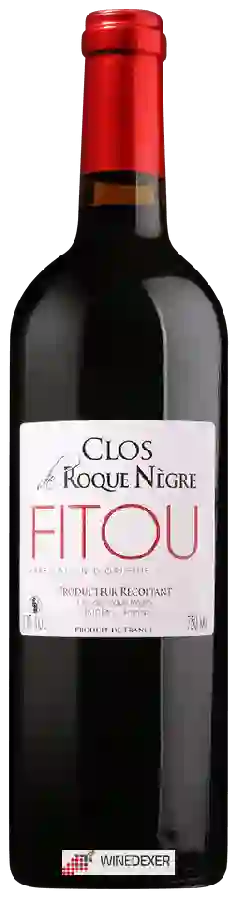
Clos de Roque NègreFitou
 Red wine


In the mouth this red wine is a powerful with a nice balance between acidity and tannins.
This wine generally goes well with beef, veal or pasta.

Taste structure of the Fitou from the Clos de Roque Nègre
Light | Bold | |
Smooth | Tannic | |
Dry | Sweet | |
Soft | Acidic |
In the mouth the Fitou of Clos de Roque Nègre in the region of Languedoc-Roussillon is a powerful with a nice balance between acidity and tannins.
Food and wine pairings with Fitou
Pairings that work perfectly with Fitou



Original food and wine pairings with Fitou
The Fitou of Clos de Roque Nègre matches generally quite well with dishes of beef, pasta or veal such as recipes of tournedos rossini with port sauce, chinese noodles with shrimp or veal shank in a pot au feu with star anise.
Details and technical informations about Clos de Roque Nègre's Fitou.
Discover the grape variety: Calabre blanc
Aromatic dry and semi-dry whites with a pale golden colour, a supple palate with moderate acidity, and characteristic muscat aromas (fresh grape, flowers) with Mediterranean notes. Simple profile. Nearly extinct in commercial cultivation, preserved in varietal collections; witnesses the historical spread of Italian varieties across central and eastern Europe. Historic Italian white variety, once grown in central and southern Italy and eastern Europe.
Informations about the Clos de Roque Nègre
The Clos de Roque Nègre is one of of the world's greatest estates. It offers 1 wines for sale in the of Fitou to come and discover on site or to buy online.

The wine region of Fitou
Languedoc's 1st red AOC (1948), realm of Carignan on 2 separated entities (maritime Leucate lagoon, mountainous Mont Tauch). Signature powerful structured reds with notes of black cherry, blackberry, garrigue, liquorice, pepper and schistous mineral touch, firm tannins and warm mouth — sunny ageing wines (5-15 years). Grenache brings finesse and fruit, Syrah spice, Mourvèdre depth. Schist and limestone soils over ~2,500 ha.
The wine region of Languedoc-Roussillon
Largest single French vineyard, dominated by sunny, generous reds. Spicy Syrah, candied Grenache (ripe fruit, garrigue), structured Carignan, deep Mourvèdre, supple Cinsault. Stars: structured Corbières, Minervois, Faugères, Saint-Chinian; round Côtes-du-Roussillon. Legendary vins doux naturels: Banyuls and Maury (fortified Grenache) with notes of cocoa, fig, prune.
The word of the wine: Licking
Operation consisting in sanitizing a barrel by introducing a wick of ignited sulphur which produces a release of sulphurous gas.