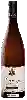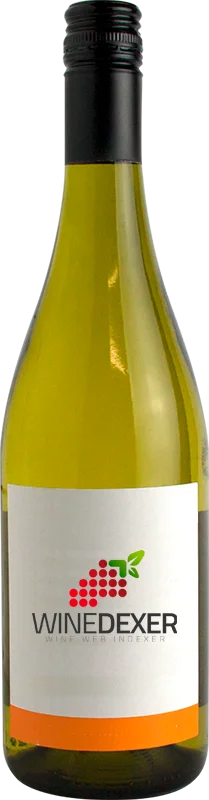
Winery Claude LafondSauvignon
 White wine


This wine generally goes well with vegetarian, rich fish (salmon, tuna etc) or shellfish.
The Sauvignon of the Winery Claude Lafond is in the top 80 of wines of Loire Valley.
Food and wine pairings with Sauvignon
Pairings that work perfectly with Sauvignon



Original food and wine pairings with Sauvignon
The Sauvignon of Winery Claude Lafond matches generally quite well with dishes of rich fish (salmon, tuna etc), shellfish or vegetarian such as recipes of penne with smoked salmon and crème fraiche, spaghetti with squid ink (italy) or broccoli and blue cheese quiche without pastry.
Details and technical informations about Winery Claude Lafond's Sauvignon.
Discover the grape variety: Grosse Arvine
Most certainly originating from the Swiss Valais - Martigny and Fully vineyards - it is the result of a natural intraspecific crossing between the rèze and a child of the arvine with which it should not be confused. Today, grosse Arvine is practically no longer cultivated and remains completely unknown in France, as in all other wine-producing countries.
Informations about the Winery Claude Lafond
The Winery Claude Lafond is one of of the world's great estates. It offers 36 wines for sale in the of Loire Valley to come and discover on site or to buy online.

The wine region of Loire Valley
The Loire Valley is a key wine region in western France. It follows the course of the Loire River on its Long journey through the heart of France, from the inland hills of the Auvergne to the plains of the French Atlantic coast near Nantes (Muscadet country). Important in terms of quantity and quality, the region produces large quantities (about 4 million h/l each year) of everyday wines, as well as some of France's greatest wines. Diversity is another of the region's major assets; the styles of wine produced here range from the light, tangy Muscadet to the Sweet, honeyed Bonnezeaux, the Sparkling whites of Vouvray and the juicy, Tannic reds of Chinon and Saumur.
The word of the wine: Hat
Solid part (marc), composed of pips and skins (sometimes of the stalk), which forms at the top of the tank during fermentation. The pigeage consists in breaking this cap to put back in suspension these elements and to favour the exchanges between the juice and the skins.