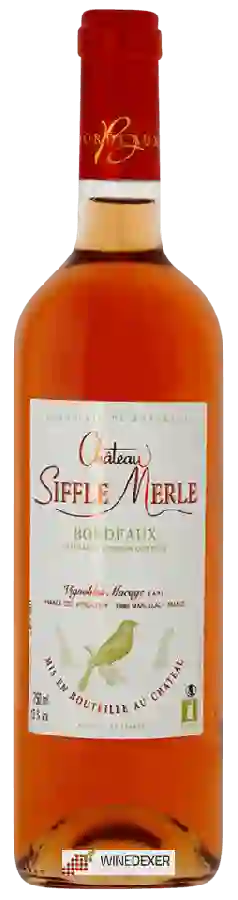
Château Siffle MerleBordeaux RRosé
 Pink wine
This wine generally goes well with beef and game (deer, venison).

Food and wine pairings with Bordeaux RRosé
Pairings that work perfectly with Bordeaux RRosé


Original food and wine pairings with Bordeaux RRosé
The Bordeaux RRosé of Château Siffle Merle matches generally quite well with dishes of beef or game (deer, venison) such as recipes of adapted vietnamese fondue or rabbit with beer and mustard.
Details and technical informations about Château Siffle Merle's Bordeaux RRosé.
Discover the grape variety: Merlot
Round and fleshy reds with a velvety texture, showing aromas of ripe plum, black cherry, cocoa and truffle notes with age. Supple tannins, generous alcohol, indulgent finish. Pillar of Libournais (Pomerol with Pétrus, Saint-Émilion with Cheval Blanc and Ausone) and signature of Super Tuscans, Italian Wales and Washington State. A cross of Cabernet Franc × Magdeleine Noire, France's most planted red variety.
Informations about the Château Siffle Merle
The Château Siffle Merle is one of of the world's greatest estates. It offers 8 wines for sale in the of Bordeaux to come and discover on site or to buy online.

The wine region of Bordeaux
World-renowned age-worthy reds, led by round Merlot (plum, black fruit) or firm Cabernet Sauvignon (blackcurrant, cedar, graphite), blended with Cabernet Franc and Petit Verdot for tannic structure. Structured Médoc and Graves, velvety Saint-Émilion and Pomerol. Also crisp dry whites (Sauvignon/Sémillon) and opulent sweet Sauternes with honey and candied fruit. A 110,000 ha Gironde vineyard, 65 appellations, cradle of the 1855 classified growths.
The word of the wine: Dismantling
After devatting, the pomace is removed from the tank. If this operation is carried out manually, it is important to ventilate the vat well to avoid the risk of accidents due to the presence of carbon dioxide.