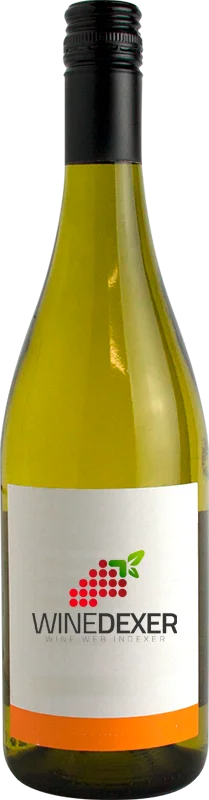
Château Prieure Saint-AndreEmilie Mon Blanc
 White wine



In the mouth this white wine is a .
This wine generally goes well with vegetarian, poultry or lean fish.
Taste structure of the Emilie Mon Blanc from the Château Prieure Saint-Andre
Light | Bold | |
Dry | Sweet | |
Soft | Acidic |
In the mouth the Emilie Mon Blanc of Château Prieure Saint-Andre in the region of Languedoc-Roussillon is a .
Food and wine pairings with Emilie Mon Blanc
Pairings that work perfectly with Emilie Mon Blanc



Original food and wine pairings with Emilie Mon Blanc


The Emilie Mon Blanc of Château Prieure Saint-Andre matches generally quite well with dishes of pasta, vegetarian or poultry such as recipes of gratin of coquillettes with ham, vegan leek and tofu quiche or basque piperade.
Details and technical informations about Château Prieure Saint-Andre's Emilie Mon Blanc.
Discover the grape variety: Peloursin
Peloursin is an ancient grape variety from the Grésivaudant Valley in Isère. Its bunches are of medium size. They are conical-cylindrical, compact and winged. The berries are rather large and covered with a thin bluish-black or rarely grey skin. The peloursin is now endangered. It only occupies half a hectare and is almost never propagated. This variety buds late. The grapes can be picked from the twentieth day after the chasselas harvest. Peloursin's bearing is somewhat sloping. This variety is very vigorous and can become very productive over the years as its stocks become larger and larger. However, it must be protected from black rot and grey rot, which it is particularly afraid of. The wine produced from Peloursin has a fairly good colour, astringent but still ordinary.
Informations about the Château Prieure Saint-Andre
The Château Prieure Saint-Andre is one of of the world's greatest estates. It offers 8 wines for sale in the of Saint-Chinian to come and discover on site or to buy online.

The wine region of Saint-Chinian
Saint-Chinian is an appellation in the Languedoc-roussillon">Languedoc-Roussillon wine region of southern France. It is located between Minervois and Faugeres, which produce similar styles of robust red wine from similar grapes and in a similar landscape. It is also adjacent to the Muscat de Saint-Jean-de-Minervois appellation, which produces Sweet white wines. Therefore, the diversity of the Languedoc region is well demonstrated in this small area.
The wine region of Languedoc-Roussillon
Languedoc (formerly Coteaux du Languedoc) is a key appellation used in the Languedoc-Roussillon wine region of southern France. It covers Dry table wines of all three colors (red, white and rosé) from the entire region, but leaves Sweet and Sparkling wines to other more specialized appellations. About 75% of all Languedoc wines are red, with the remaining 25% split roughly down the middle between whites and rosés. The appellation covers most of the Languedoc region and almost a third of all the vineyards in France.
The word of the wine: Dame-jeanne
Large bottle or wicker-clad carboy used to transport wine and store old spirits before blending.