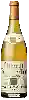
Château JuvenalMuscat de Beaumes de Venise
 Natural sweet wine


This wine generally goes well with spicy food and sweet desserts.
Wine flavors and olphactive analysis

Food and wine pairings with Muscat de Beaumes de Venise
Pairings that work perfectly with Muscat de Beaumes de Venise


Original food and wine pairings with Muscat de Beaumes de Venise
The Muscat de Beaumes de Venise of Château Juvenal matches generally quite well with dishes of spicy food or sweet desserts such as recipes of julienne fillets in coconut milk or tarte tatin.
Details and technical informations about Château Juvenal's Muscat de Beaumes de Venise.
Discover the grape variety: Suffolk red
Interspecific crossing between the fredonia or early concord and the black monukka - the latter also being called russian seedless or black kischmish - obtained in 1935 by John Einset (1915/1981) at the Agricultural Experimental Station of the State of New-York (United States) ... practically unknown in France except for amateur gardeners, registered however in the Official Catalogue of the varieties of grapevine of table A2 list. Note that it has concord and isabelle as parents.
Last vintages of this wine
The best vintages of Muscat de Beaumes de Venise from Château Juvenal are 2015
Informations about the Château Juvenal
The Château Juvenal is one of of the world's greatest estates. It offers 20 wines for sale in the of Muscat de Beaumes de Venise to come and discover on site or to buy online.

The wine region of Muscat de Beaumes de Venise
The wine region of Muscat de Beaumes de Venise is located in the region of Beaumes-de-Venise of Rhone Valley of France. Wineries and vineyards like the Domaine Bernardins or the Domaine Alain Ignace produce mainly wines natural sweet, white and sweet. The most planted grape varieties in the region of Muscat de Beaumes de Venise are Chardonnay, Mourvèdre and Marsanne, they are then used in wines in blends or as a single variety. On the nose of Muscat de Beaumes de Venise often reveals types of flavors of pineapple, cheese or apples and sometimes also flavors of white peach, raisin or mint.
The wine region of Rhone Valley
The Rhone Valley is a key wine-producing region in Southeastern France. It follows the North-south course of the Rhône for nearly 240 km, from Lyon to the Rhône delta (Bouches-du-Rhône), near the Mediterranean coast. The Length of the valley means that Rhône wines are the product of a wide variety of soil types and mesoclimates. The viticultural areas of the region cover such a distance that there is a widely accepted division between its northern and southern parts.
The word of the wine: Lightning
Large capacity barrel.