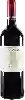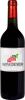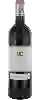
Château Haut-PommarédeCuvee Alienor Graves
 Red wine
This wine generally goes well with poultry, beef or game (deer, venison).
Food and wine pairings with Cuvee Alienor Graves
Pairings that work perfectly with Cuvee Alienor Graves



Original food and wine pairings with Cuvee Alienor Graves

The Cuvee Alienor Graves of Château Haut-Pommaréde matches generally quite well with dishes of beef, lamb or game (deer, venison) such as recipes of fillet of beef in a foie gras and truffle crust, lamb roast with lavender or veal blanquette à l'ancienne.
Details and technical informations about Château Haut-Pommaréde's Cuvee Alienor Graves.
Discover the grape variety: Cabernet blanc
Interspecific cross between Cabernet Sauvignon and a long-unknown grape variety - that would be Regent - obtained in 1991 by Valentin Blattner from Soyhières (Switzerland) and propagated by Volker Freytag (Germany). No resistance gene has been identified to either mildew or powdery mildew. Cabernet blanc can be found in Switzerland, Belgium, the Netherlands, Germany, Austria, Luxembourg, the Czech Republic, Italy, England, etc., but is still little known in France.
Informations about the Château Haut-Pommaréde
The Château Haut-Pommaréde is one of of the world's greatest estates. It offers 6 wines for sale in the of Graves to come and discover on site or to buy online.

The wine region of Graves
Graves is a wine region on the left bank of the Bordeaux region of France, characterized by the gravel soils that give it its name. Unique among the sub-regions of Bordeaux, Graves is equally respected for its red and white wines. The AOC Graves, which covers both red and white wines, is the catch-all appellation of the district. A typical Graves red is based on the classic Bordeaux grapes, Cabernet Sauvignon and Merlot, with Cabernet Franc, Malbec and Petit Verdot sometimes in a supporting role.
The wine region of Bordeaux
Bordeaux, in southwestern France, is one of the most famous, prestigious and prolific wine regions in the world. The majority of Bordeaux wines (nearly 90% of the production Volume) are the Dry, medium and Full-bodied red Bordeaux blends for which it is famous. The finest (and most expensive) are the wines of the great châteaux of Haut-Médoc and the right bank appellations of Saint-Émilion and Pomerol. The former focuses (at the highest level) on Cabernet Sauvignon, the latter on Merlot.
The word of the wine: Deposit
Solid particles that can naturally coat the bottom of a bottle of wine. It is rather a guarantee that the wine has not been mistreated: in fact, to avoid the natural deposit, rather violent processes of filtration or cold passage (- 7 or - 8 °C) are used in order to precipitate the tartar (the small white crystals that some people confuse with crystallized sugar: just taste to dissuade you from it)