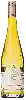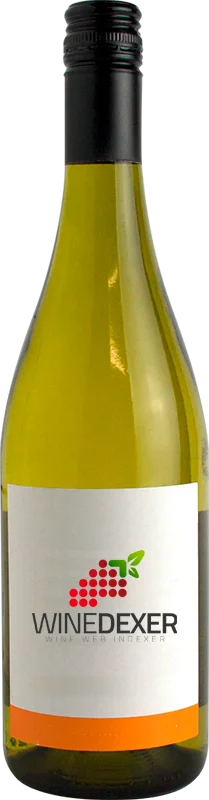
Château de la ThébaudièreMuscadet-Sevre et Maine Sur Lie
 White wine



In the mouth this white wine is a with a nice freshness.
This wine generally goes well with appetizers and snacks, lean fish or shellfish.
The Muscadet-Sevre et Maine Sur Lie of the Château de la Thébaudière is in the top 50 of wines of Muscadet-Sevre et Maine.
Taste structure of the Muscadet-Sevre et Maine Sur Lie from the Château de la Thébaudière
Light | Bold | |
Dry | Sweet | |
Soft | Acidic |
In the mouth the Muscadet-Sevre et Maine Sur Lie of Château de la Thébaudière in the region of Loire Valley is a with a nice freshness.
Wine flavors and olphactive analysis




On the nose the Muscadet-Sevre et Maine Sur Lie of Château de la Thébaudière in the region of Loire Valley often reveals types of flavors of citrus, green apple or minerality and sometimes also flavors of lemon, pear or honey.
Food and wine pairings with Muscadet-Sevre et Maine Sur Lie
Pairings that work perfectly with Muscadet-Sevre et Maine Sur Lie



Original food and wine pairings with Muscadet-Sevre et Maine Sur Lie

The Muscadet-Sevre et Maine Sur Lie of Château de la Thébaudière matches generally quite well with dishes of shellfish, appetizers and snacks or lean fish such as recipes of shrimp risotto with curry, snowman in pudding or fish with tamarind.
Details and technical informations about Château de la Thébaudière's Muscadet-Sevre et Maine Sur Lie.
Discover the grape variety: Nuragus
A very old variety grown in Italy, where it still plays an important role, particularly in Sardinia. - Synonyms: meragus, abbondosa, bruscu biancu, axina, garnaccia, granazza, burdu, malvasia di tura (for all the synonyms of the varieties). - Description: medium to large bunches, conical, voluminous, compact, short strong stems, often with a lignified part; medium-sized, spherical or slightly elongated berries, greenish-yellow to golden-yellow skin, sometimes amber with a pink tinge when fully ripe, soft pulp with a simple taste. - Production potential: late budding. Quite vigorous and very productive, suitable for almost all types of soil. Hardy, it resists well to the various cryptogamic diseases. Maturity: 3rd period average. - Wine type/Aromas: gives a heady wine of yellow straw color with sometimes golden reflections, provided in the majority of the cases with a good acidity.
Last vintages of this wine
The best vintages of Muscadet-Sevre et Maine Sur Lie from Château de la Thébaudière are 2018, 2017, 2016, 2012 and 2015.
Informations about the Château de la Thébaudière
The Château de la Thébaudière is one of of the world's greatest estates. It offers 1 wines for sale in the of Muscadet-Sevre et Maine to come and discover on site or to buy online.

The wine region of Muscadet-Sevre et Maine
The wine region of Muscadet-Sevre et Maine is located in the region of Muscadet of Muscadet of France. Wineries and vineyards like the Domaine de l'Ecu or the Domaine de Bellevue produce mainly wines white and red. The most planted grape varieties in the region of Muscadet-Sevre et Maine are Melon, Muscadelle and Folle blanche, they are then used in wines in blends or as a single variety. On the nose of Muscadet-Sevre et Maine often reveals types of flavors of cream, asparagus or baked apple and sometimes also flavors of honeydew melon, hay or citrus zest.
The wine region of Loire Valley
The Loire Valley is a key wine region in western France. It follows the course of the Loire River on its Long journey through the heart of France, from the inland hills of the Auvergne to the plains of the French Atlantic coast near Nantes (Muscadet country). Important in terms of quantity and quality, the region produces large quantities (about 4 million h/l each year) of everyday wines, as well as some of France's greatest wines. Diversity is another of the region's major assets; the styles of wine produced here range from the light, tangy Muscadet to the Sweet, honeyed Bonnezeaux, the Sparkling whites of Vouvray and the juicy, Tannic reds of Chinon and Saumur.
The word of the wine: Phenolic ripeness
A distinction is made between the ripeness of sugars and acids and the ripeness of tannins and other compounds such as anthocyanins and tannins, which will bring structure and colour. Grapes can be measured at 13° potential without having reached this phenolic maturity. Vinified at this stage, they will give hard, astringent wines, without charm.