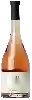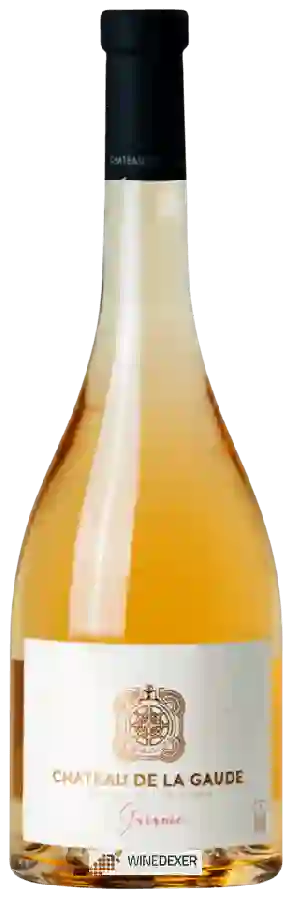
Château de la GaudeGarance
 Pink wine


In the mouth this pink wine is a with a nice freshness.
This wine generally goes well with pork, vegetarian or poultry.

Taste structure of the Garance from the Château de la Gaude
Light | Bold | |
Dry | Sweet | |
Soft | Acidic |
In the mouth the Garance of Château de la Gaude in the region of Provence is a with a nice freshness.
Wine flavors and olphactive analysis

Food and wine pairings with Garance
Pairings that work perfectly with Garance



Original food and wine pairings with Garance

The Garance of Château de la Gaude matches generally quite well with dishes of pork, shellfish or vegetarian such as recipes of delicious marinated pork chops, waterzooï of the sea or cream and tuna quiche.
Details and technical informations about Château de la Gaude's Garance.
Discover the grape variety: Maturana Tinta
Structured, coloured reds with a deep purple robe, firm tannins and a dense palate with preserved acidity. Signature aromas of black fruits (blackberry, blackcurrant), plum, spices, pepper and balsamic notes from the Rioja. Fine ageing potential. Reintroduced into the Rioja DOCa appellation in 2007, it represents a qualitative diversification of Riojan reds alongside Tempranillo. Native Spanish black grape of La Rioja, recently rediscovered after near extinction.
Last vintages of this wine
The best vintages of Garance from Château de la Gaude are 2018
Informations about the Château de la Gaude
The Château de la Gaude is one of of the world's greatest estates. It offers 6 wines for sale in the of Coteaux d'Aix-en-Provence to come and discover on site or to buy online.

The wine region of Coteaux d'Aix-en-Provence
Provençal AOC between the Durance, Rhône, Mediterranean and Sainte-Victoire, 70% rosés. Fresh, fruity rosés with signature notes of strawberry, grapefruit, white peach, flowers and a garrigue touch, taut and thirst-quenching palate — the sunny Provençal aperitif. Supple reds blending Grenache, Syrah, Cinsault, Mourvèdre and Cabernet Sauvignon (spice, density, structure). Whites Rolle (Vermentino) and Clairette, ample with white flowers.
The wine region of Provence
World capital of dry, refined rosé (~90% of production). Pale rose-petal colour, delicate nose of fresh red fruits (strawberry, raspberry, redcurrant), citrus (pink grapefruit), white flowers and a mineral touch, taut and thirst-quenching palate — the Mediterranean aperitif par excellence. Blends of Grenache, Cinsault, Syrah, Tibouren and Mourvèdre. Fleshy Bandol reds from Mourvèdre (leather, garrigue, age-worthy), straight Cassis whites.
The word of the wine: Body
Character of a wine combining a good constitution (structure and flesh) with warmth.