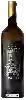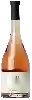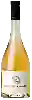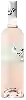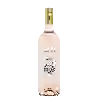
Château de la GaudeAltitude 400 Effervescent Rosé
 wine
wine
This wine generally goes well with
The Altitude 400 Effervescent Rosé of the Château de la Gaude is in the top 0 of wines of Coteaux d'Aix-en-Provence.

Details and technical informations about Château de la Gaude's Altitude 400 Effervescent Rosé.
Discover the grape variety: Maraština
Structured, rich dry whites with a pale golden colour, a broad palate and moderate acidity; signature aromas of almond, yellow fruits (pear, quince), white flowers (acacia) and saline Dalmatian marine notes. Also made into sweet Prošek with dried fruits and honey. Thrives on the calcareous coastal terroirs of the Adriatic in Dalmatia. Indigenous Croatian white grape from Dalmatia, identical to Italian Rukatac.
Informations about the Château de la Gaude
The Château de la Gaude is one of of the world's greatest estates. It offers 6 wines for sale in the of Coteaux d'Aix-en-Provence to come and discover on site or to buy online.

The wine region of Coteaux d'Aix-en-Provence
Provençal AOC between the Durance, Rhône, Mediterranean and Sainte-Victoire, 70% rosés. Fresh, fruity rosés with signature notes of strawberry, grapefruit, white peach, flowers and a garrigue touch, taut and thirst-quenching palate — the sunny Provençal aperitif. Supple reds blending Grenache, Syrah, Cinsault, Mourvèdre and Cabernet Sauvignon (spice, density, structure). Whites Rolle (Vermentino) and Clairette, ample with white flowers.
The wine region of Provence
World capital of dry, refined rosé (~90% of production). Pale rose-petal colour, delicate nose of fresh red fruits (strawberry, raspberry, redcurrant), citrus (pink grapefruit), white flowers and a mineral touch, taut and thirst-quenching palate — the Mediterranean aperitif par excellence. Blends of Grenache, Cinsault, Syrah, Tibouren and Mourvèdre. Fleshy Bandol reds from Mourvèdre (leather, garrigue, age-worthy), straight Cassis whites.
The word of the wine: Oenologist
Specialist in wine-making techniques. It is a profession and not a passion: one can be an oenophile without being an oenologist (and the opposite too!). Formerly attached to the Faculty of Pharmacy, oenology studies have become independent and have their own university course. Learning to make wine requires a good chemical background but also, increasingly, a good knowledge of the plant. Some oenologists work in laboratories (analysis). Others, the consulting oenologists, work directly in the properties.