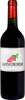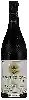
Château BlancGuillaume de Cabestan
 Red wine


This wine generally goes well with beef, lamb or mature and hard cheese.
The Guillaume de Cabestan of the Château Blanc is in the top 10 of wines of Rhone Valley.

Wine flavors and olphactive analysis

On the nose the Guillaume de Cabestan of Château Blanc in the region of Rhone Valley often reveals types of flavors of blueberry, black fruit.
Food and wine pairings with Guillaume de Cabestan
Pairings that work perfectly with Guillaume de Cabestan



Original food and wine pairings with Guillaume de Cabestan

The Guillaume de Cabestan of Château Blanc matches generally quite well with dishes of beef, lamb or spicy food such as recipes of boles de picolat (catalan meatballs), lamb marinated in white wine or moroccan kefta balls.
Details and technical informations about Château Blanc's Guillaume de Cabestan.
Discover the grape variety: Iona
Simple, aromatic whites with a pale golden robe, a supple palate with preserved acidity. Characteristic foxy aromas of Vitis labrusca (wild strawberry, wild raspberry). Early ripening, cold-hardy. Grown in the north-eastern United States and Canada (Ontario) for simple wines, local sparkling wines and fresh consumption. An American white hybrid derived from Vitis labrusca, discovered around 1855 in New York State.
Last vintages of this wine

The best vintages of Guillaume de Cabestan from Château Blanc are 2011, 2006, 2017, 2013 and 2010.
Informations about the Château Blanc
The Château Blanc is one of of the world's greatest estates. It offers 28 wines for sale in the of Rhone Valley to come and discover on site or to buy online.

The wine region of Rhone Valley
France's 2nd-largest AOC vineyard, two complementary worlds. Northern: pure Syrah in signature reds (Côte-Rôtie, Hermitage, Cornas), deep and peppery with blackberry, violet, black olive and smoked bacon notes, exceptional ageing. Opulent Viognier whites (Condrieu, apricot, flowers) and ample Marsanne-Roussanne. Southern: sun-soaked Grenache blends at Châteauneuf, Gigondas, Vacqueyras (candied fruit, garrigue).
The word of the wine: INAO glass
Glass adapted to wine tasting, created in the 1970s by the Institut national des appellations d'origine. At the time, it had the advantage of offering a standardised tool to all tasters. It is characterized by a wide base that allows for good ventilation and a narrow mouth (opening of the glass) to concentrate the aromas. Many high-performance glasses have been created based on this model.