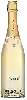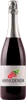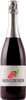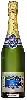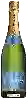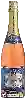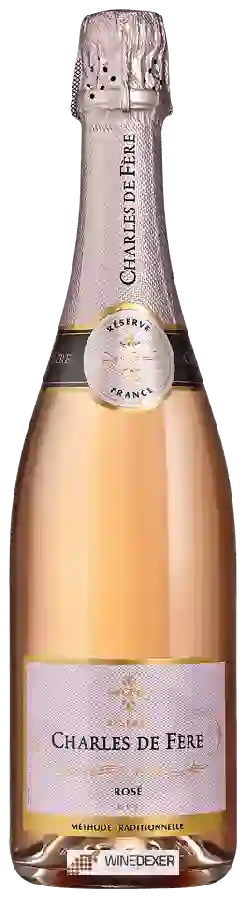
Winery Charles de FéreRosé Reserve Methode Traditional Dry
 Sparkling wine


This wine is a blend of 3 varietals which are the Bobal, the Cabernet-Sauvignon and the Gamay noir.
This wine generally goes well with poultry, beef or lamb.
Wine flavors and olphactive analysis






On the nose the Rosé Reserve Methode Traditional Dry of Winery Charles de Fére in the region of Burgundy often reveals types of flavors of cream, peach or green apple and sometimes also flavors of strawberries, raspberry or non oak.
Food and wine pairings with Rosé Reserve Methode Traditional Dry
Pairings that work perfectly with Rosé Reserve Methode Traditional Dry



Original food and wine pairings with Rosé Reserve Methode Traditional Dry

The Rosé Reserve Methode Traditional Dry of Winery Charles de Fére matches generally quite well with dishes of beef, lamb or spicy food such as recipes of romazava (madagascar), mouse of lamb with thyme or spanish paella.
Details and technical informations about Winery Charles de Fére's Rosé Reserve Methode Traditional Dry.
Discover the grape variety: Bobal
This grape variety is widely cultivated in Spain under the name béni carlo. It was introduced into the Languedoc-Roussillon region of Narbonne around 1870.
Last vintages of this wine

The best vintages of Rosé Reserve Methode Traditional Dry from Winery Charles de Fére are 2008
Informations about the Winery Charles de Fére
The Winery Charles de Fére is one of of the world's greatest estates. It offers 23 wines for sale in the of Burgundy to come and discover on site or to buy online.

The wine region of Burgundy
Bourgogne is the catch-all regional appellation title of the Burgundy wine region in eastern France ("Bourgogne" is the French name for Burgundy). Burgundy has a Complex and comprehensive appellation system; counting Premier Cru and Grand Cru titles, the region has over 700 appellation titles for its wines. Thus, Burgundy wines often come from one Vineyard (or several separate vineyards) without an appellation title specific to the region, Village or even vineyard. A standard Burgundy wine may be made from grapes grown in one or more of Burgundy's 300 communes.
The word of the wine: Size
Cutting of shoots to regulate and balance the growth of the vine in order to control productivity.