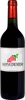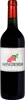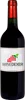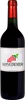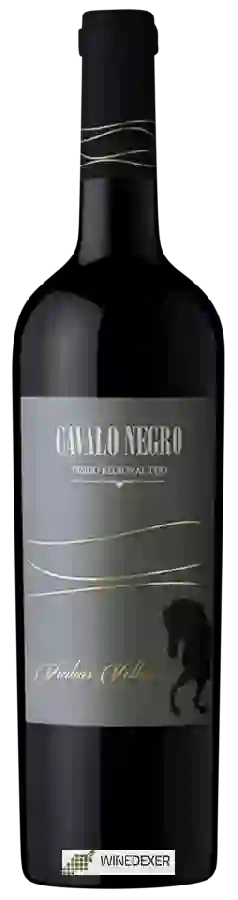
Winery Cavalo NegroVinhas Velhas
 Red wine



In the mouth this red wine is a powerful with a nice balance between acidity and tannins.
This wine generally goes well with poultry, beef or veal.
Taste structure of the Vinhas Velhas from the Winery Cavalo Negro
Light | Bold | |
Smooth | Tannic | |
Dry | Sweet | |
Soft | Acidic |
In the mouth the Vinhas Velhas of Winery Cavalo Negro in the region of Tejo is a powerful with a nice balance between acidity and tannins.
Wine flavors and olphactive analysis



On the nose the Vinhas Velhas of Winery Cavalo Negro in the region of Tejo often reveals types of flavors of non oak, earth or oak and sometimes also flavors of black fruit.
Food and wine pairings with Vinhas Velhas
Pairings that work perfectly with Vinhas Velhas



Original food and wine pairings with Vinhas Velhas

The Vinhas Velhas of Winery Cavalo Negro matches generally quite well with dishes of beef, pasta or veal such as recipes of provencal stew, wok of chinese noodles with vegetables or osso bucco milanese.
Details and technical informations about Winery Cavalo Negro's Vinhas Velhas.
Discover the grape variety: Rubilande
Rubilande rosé is a grape variety that originated in . This grape variety is the result of a cross between the same species (interspecific hybridization). It produces a variety of grape specially used for wine making. It is rare to find this grape to eat on our tables. Rubilande rosé can be found in the following vineyards: Rhône Valley, Loire Valley, Savoie & Bugey, Beaujolais, Languedoc & Roussillon.
Last vintages of this wine
The best vintages of Vinhas Velhas from Winery Cavalo Negro are 2015, 2019, 2018, 2017 and 0.
Informations about the Winery Cavalo Negro
The Winery Cavalo Negro is one of of the world's greatest estates. It offers 5 wines for sale in the of Tejo to come and discover on site or to buy online.

The wine region of Tejo
Tejo is a wine region in CentralPortugal which covers the same area as the Ribatejo province, just inland from the major city of Lisbon. The wine appellation's name was changed from Ribatejo in 2009. The entire region may use the Tejo VR (Vinho Regional) designation, similar to the French IGP/Vin de Pays, while some areas produce wines labeled with the higher-level Do Tejo DOC (Denominação de Origem Controlada). A Warm, Dry area, it is also Portugal's only landlocked region – although it is influenced considerably by the Tejo river.
The word of the wine: Decanting
Decanting, an operation performed by a sommelier with a decanter to separate the clear wine from the solid parts in a bottle.