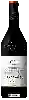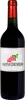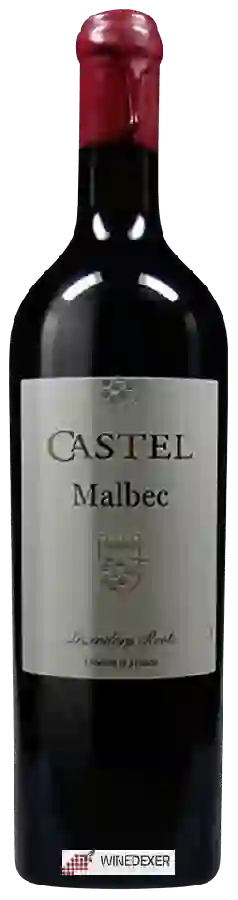
Winery CastelLegendary Roots Malbec
 Red wine


This wine generally goes well with poultry, beef or mature and hard cheese.

Wine flavors and olphactive analysis




On the nose the Legendary Roots Malbec of Winery Castel in the region of Comté Tolosan often reveals types of flavors of cherry, earthy or blackberry and sometimes also flavors of pepper, non oak or earth.
Food and wine pairings with Legendary Roots Malbec
Pairings that work perfectly with Legendary Roots Malbec



Original food and wine pairings with Legendary Roots Malbec

The Legendary Roots Malbec of Winery Castel matches generally quite well with dishes of beef, spicy food or mature and hard cheese such as recipes of beef tongue with mushrooms, mussels with curry or franc-comtois cake.
Details and technical informations about Winery Castel's Legendary Roots Malbec.
Discover the grape variety: Malbec
Deep, velvety reds with an intense purple colour, showing aromas of blackberry, black plum, violet, cocoa and gentle spice. Round tannins, fleshy palate, peppery length. Star of Cahors AOC (Côt, Auxerrois) in France and the absolute signature of Mendoza, Argentina (Uco Valley, Luján de Cuyo). A French South-West variety that became the Argentine emblem after its post-phylloxera decline.
Last vintages of this wine

The best vintages of Legendary Roots Malbec from Winery Castel are 2010, 2012, 2011
Informations about the Winery Castel
The Winery Castel is one of of the world's great estates. It offers 114 wines for sale in the of Comté Tolosan to come and discover on site or to buy online.

The wine region of Comté Tolosan
IGP covering all of southwest France across 12 departments, a broad and accessible palette. On the Garonne right bank, supple reds dominate: signature Merlot with signature notes of plum, ripe cherry, cocoa and a herbaceous touch, round tannins. Firm Cabernet, spicy Syrah, tannic local Tannat. Left bank for whites: vivid Colombard and Gros Manseng (citrus, grapefruit, exotic fruits), aromatic Sauvignon.
The word of the wine: Courgée
Name of the fruiting branch left after pruning and which is then arched along the trellis in the Jura (in the Mâconnais, it is called the tail).