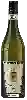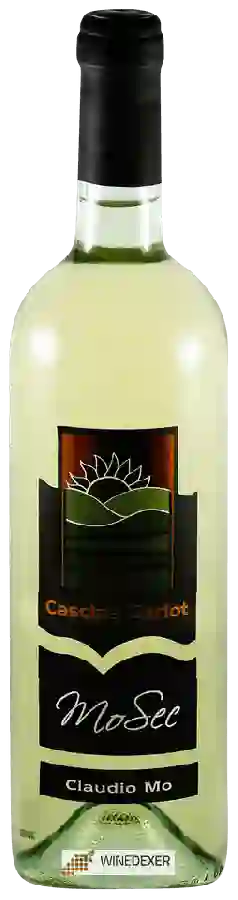
Winery Cascina CarlotMosec Bianco
 White wine



In the mouth this white wine is a powerful.
This wine generally goes well with lean fish, shellfish or mature and hard cheese.

Taste structure of the Mosec Bianco from the Winery Cascina Carlot
Light | Bold | |
Dry | Sweet | |
Soft | Acidic |
In the mouth the Mosec Bianco of Winery Cascina Carlot in the region of Piedmont is a powerful.
Food and wine pairings with Mosec Bianco
Pairings that work perfectly with Mosec Bianco



Original food and wine pairings with Mosec Bianco


The Mosec Bianco of Winery Cascina Carlot matches generally quite well with dishes of pasta, shellfish or mature and hard cheese such as recipes of pasta with boursin, scallop mousse or cheese soufflé omelette.
Details and technical informations about Winery Cascina Carlot's Mosec Bianco.
Discover the grape variety: Muscat de Saint Vallier
Table grape with long clusters and golden berries with thin skin and muscat flesh, featuring a characteristic aromatic sweet flavour (rose, fresh grape). Very rarely vinified. Grown for fresh consumption in south-eastern France, appreciated for its typical muscat flavour and good shelf life. French white table grape variety obtained around 1922 in Saint-Vallier (Drôme), a muscat crossing.
Last vintages of this wine
The best vintages of Mosec Bianco from Winery Cascina Carlot are 2018, 0
Informations about the Winery Cascina Carlot
The Winery Cascina Carlot is one of of the world's greatest estates. It offers 20 wines for sale in the of Piedmont to come and discover on site or to buy online.

The wine region of Piedmont
Kingdom of Nebbiolo: Barolo and Barbaresco DOCG, long-ageing reds with firm tannins and lively acidity, complex aromas of withered rose, sour cherry, tar, truffle and undergrowth. More accessible, tangy Barbera on red fruit, supple, crisp Dolcetto. Sweet, floral sparkling Moscato d'Asti, mineral, lemony Gavi (Cortese) white, round, almondy Arneis from Roero. 50,000 ha across the Langhe, Roero and Monferrato, UNESCO.
The word of the wine: Bitter (flavor)
A flavour generally provided in wines by polyphenols and accompanied by a sensation of pungency. In small quantities, bitterness makes you salivate, gives relief to the wine and reinforces its sapidity.