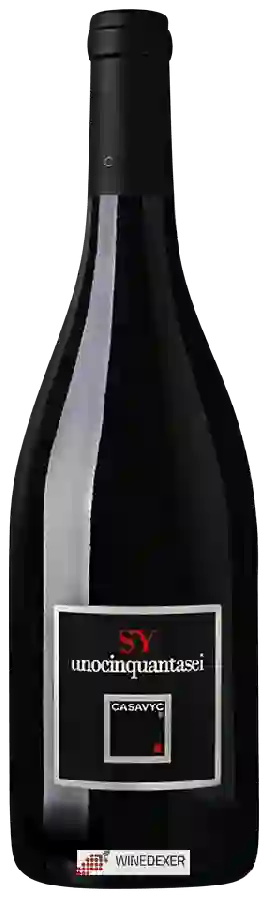
Winery CasavycSy Unocinquantasei
 Red wine


In the mouth this red wine is a with a lot of tannins present in the mouth.
This wine generally goes well with poultry, beef or veal.
Taste structure of the Sy Unocinquantasei from the Winery Casavyc
Light | Bold | |
Smooth | Tannic | |
Dry | Sweet | |
Soft | Acidic |
In the mouth the Sy Unocinquantasei of Winery Casavyc in the region of Tuscany is a with a lot of tannins present in the mouth.
Food and wine pairings with Sy Unocinquantasei
Pairings that work perfectly with Sy Unocinquantasei



Original food and wine pairings with Sy Unocinquantasei


The Sy Unocinquantasei of Winery Casavyc matches generally quite well with dishes of beef, lamb or veal such as recipes of beef pot-au-feu, lamb keftas or vitello tonnato.
Details and technical informations about Winery Casavyc's Sy Unocinquantasei.
Discover the grape variety: Oseleta
A very old grape variety grown in Italy that almost disappeared because it is a small producer. In France, it is almost unknown. Oseleta is said to be related to corvina, rondinella, garganega, etc. It should not be confused, on the one hand, with the table grape osella - an interspecific cross of German origin - and, on the other hand, with osel(l)a another Italian wine grape variety.
Last vintages of this wine

The best vintages of Sy Unocinquantasei from Winery Casavyc are 2009, 2008
Informations about the Winery Casavyc
The Winery Casavyc is one of of the world's greatest estates. It offers 13 wines for sale in the of Tuscany to come and discover on site or to buy online.

The wine region of Tuscany
Tuscany is one of the most famous and prolific wine regions in Europe. It is best known for its Dry red wines made from Sangiovese grapes, which dominate production. These include Chianti, Brunello di Montalcino and Vino Nobile di Montepulciano. The region's Vin Santo is also highly prized, as are its passito dessert wines, though these are produced in comparatively tiny quantities.
The word of the wine: Lies
A deposit formed by dead yeast after fermentation. Some white wines are aged on their lees, which makes their aromas and structure more complex and richer.