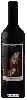
Winery CamelotZinfandel
 Red wine
In the mouth this red wine is a powerful.
This wine generally goes well with poultry, beef or lamb.
Taste structure of the Zinfandel from the Winery Camelot
Light | Bold | |
Smooth | Tannic | |
Dry | Sweet | |
Soft | Acidic |
In the mouth the Zinfandel of Winery Camelot in the region of California is a powerful.
Food and wine pairings with Zinfandel
Pairings that work perfectly with Zinfandel



Original food and wine pairings with Zinfandel
The Zinfandel of Winery Camelot matches generally quite well with dishes of beef, lamb or poultry such as recipes of beef luc lake, original mafé with okra or cantonese rice.
Details and technical informations about Winery Camelot's Zinfandel.
Discover the grape variety: Zinfandel
From Croatia where it is called crljenak kastelanski or pribidrag. According to genetic analyses carried out by Professor Carole Meredith of California University in Davis (United States), it is related to the Croatian plavac mali and Zinfandel. It is also found in South Africa, New Zealand, Chile, Brazil, Germany, Bulgaria, Albania, Italy under the name of Primitivo, Malta, Greece, Portugal and to some extent in Croatia. In the United States (California), it is one of the most widely planted grape varieties, having been introduced in the 1830s well before Primitivo. In France, it is registered in the official catalogue of vine varieties on the A1 list under the name Primitivo.
Informations about the Winery Camelot
The Winery Camelot is one of of the world's greatest estates. It offers 10 wines for sale in the of California to come and discover on site or to buy online.

The wine region of California
California is the largest and most important wine region in the United States. It represents the southern two-thirds (850 miles or 1,370 kilometers) of the country's west coast. (Oregon and Washington make up the rest. ) The state also spans nearly 10 degrees of latitude.
The word of the wine: Flow
Action consisting of draining the wine from a vat of red wine (free-run wine), the marc then being pressed to obtain the press wine.