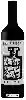
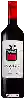
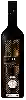
Winery CalabuigBobal Old Vines
 Red wine


In the mouth this red wine is a powerful with a nice freshness.
This wine generally goes well with poultry, beef or veal.
Taste structure of the Bobal Old Vines from the Winery Calabuig
Light | Bold | |
Smooth | Tannic | |
Dry | Sweet | |
Soft | Acidic |
In the mouth the Bobal Old Vines of Winery Calabuig in the region of Valence is a powerful with a nice freshness.
Wine flavors and olphactive analysis


On the nose the Bobal Old Vines of Winery Calabuig in the region of Valence often reveals types of flavors of oak.
Food and wine pairings with Bobal Old Vines
Pairings that work perfectly with Bobal Old Vines



Original food and wine pairings with Bobal Old Vines

The Bobal Old Vines of Winery Calabuig matches generally quite well with dishes of beef, pasta or veal such as recipes of fresh sausage, lasagne or sauté of veal with carrots.
Details and technical informations about Winery Calabuig's Bobal Old Vines.
Discover the grape variety: Bobal
This grape variety is widely cultivated in Spain under the name béni carlo. It was introduced into the Languedoc-Roussillon region of Narbonne around 1870.
Last vintages of this wine

The best vintages of Bobal Old Vines from Winery Calabuig are 2010, 2019, 2015, 2013 and 0.
Informations about the Winery Calabuig
The Winery Calabuig is one of of the world's greatest estates. It offers 6 wines for sale in the of Valence to come and discover on site or to buy online.

The wine region of Valence
Valencia is a province in the centre of Spain's sunny east coast, perhaps better known for its oranges (and paella) than its wine. The administrative Center of Valencia is the city of the same name, the third largest in Spain and the largest port on the Mediterranean. Archaeological evidence suggests that wine making in Valencia dates back more than a thousand years, but the region has never been particularly prominent on the world wine map. In modern times, Valencia's wine production has focused on quantity rather than quality, although this is gradually changing.
The word of the wine: Deposit
Solid particles that can naturally coat the bottom of a bottle of wine. It is rather a guarantee that the wine has not been mistreated: in fact, to avoid the natural deposit, rather violent processes of filtration or cold passage (- 7 or - 8 °C) are used in order to precipitate the tartar (the small white crystals that some people confuse with crystallized sugar: just taste to dissuade you from it)