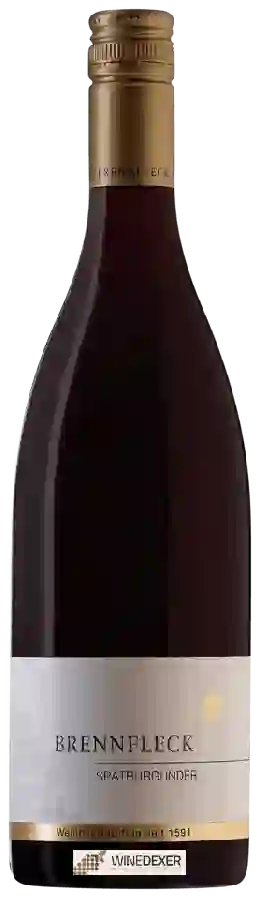
Winery BrennfleckSpätburgunder
 Red wine


In the mouth this red wine is a with a nice freshness.
This wine generally goes well with poultry, beef or veal.

Taste structure of the Spätburgunder from the Winery Brennfleck
Light | Bold | |
Smooth | Tannic | |
Dry | Sweet | |
Soft | Acidic |
In the mouth the Spätburgunder of Winery Brennfleck in the region of Franken is a with a nice freshness.
Food and wine pairings with Spätburgunder
Pairings that work perfectly with Spätburgunder



Original food and wine pairings with Spätburgunder

The Spätburgunder of Winery Brennfleck matches generally quite well with dishes of beef, veal or game (deer, venison) such as recipes of american fillet (belgian-style beef tartar), cordon bleu with veal and cured ham or duck breast in the oven.
Details and technical informations about Winery Brennfleck's Spätburgunder.
Discover the grape variety: Savagnin rose
Aromatic, refined whites with a pale golden hue, a broad palate and preserved acidity, featuring musky aromas, rose, white flowers, yellow fruits (peach) and spicy notes. Delicate perfumed profile. Grown in small quantities in Jura and Alsace (Klevener de Heiligenstein), yielding distinctive, original wines for early or extended drinking. Pink-skinned mutation of white Savagnin, the iconic Jura variety.
Last vintages of this wine
The best vintages of Spätburgunder from Winery Brennfleck are 0
Informations about the Winery Brennfleck
The Winery Brennfleck is one of of the world's great estates. It offers 53 wines for sale in the of Franken to come and discover on site or to buy online.

The wine region of Franken
Homeland of German Silvaner: dry, straight, mineral and lively whites with notes of green apple, citrus, fresh herbs and a saline touch, planted here for over 350 years (1,500 ha, a quarter of the vineyard). Also supple, floral Müller-Thurgau, taut Riesling, aromatic Bacchus. Some discreet reds (Spätburgunder). 6,040 ha in Bavaria along the Main around Würzburg, red sandstone and shell-limestone soils.
The word of the wine: Rebêche (champagne)
Must obtained in excess of the 2 550 litres authorised for a weight of 4 000 kilos of grapes. The first 2 050 litres constitute the cuvée and the next 500 litres the taille. The rebêche represents 1 to 3 % of the total volume and must be distilled or used to make ratafia.