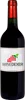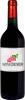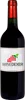
Winery Braun Et SöhneDornfelder Trocken
 Red wine
In the mouth this red wine is a .
This wine generally goes well with pork, poultry or veal.
Taste structure of the Dornfelder Trocken from the Winery Braun Et Söhne
Light | Bold | |
Smooth | Tannic | |
Dry | Sweet | |
Soft | Acidic |
In the mouth the Dornfelder Trocken of Winery Braun Et Söhne in the region of Pfalz is a .
Food and wine pairings with Dornfelder Trocken
Pairings that work perfectly with Dornfelder Trocken



Original food and wine pairings with Dornfelder Trocken

The Dornfelder Trocken of Winery Braun Et Söhne matches generally quite well with dishes of pasta, veal or pork such as recipes of pasta shells, beef colombo bourguignon style or reblochon tartiflette.
Details and technical informations about Winery Braun Et Söhne's Dornfelder Trocken.
Discover the grape variety: Dornfelder
German, intraspecific cross made in 1955 by August Karl Herold (1902-1973) between the helfensteiner and the heroldrebe (more details, click here!). With these same parents he also obtained the hegel. The Dornfelder can be found in Switzerland, United Kingdom, Belgium, Germany, Austria, Czech Republic, Canada, United States, ... . Virtually unknown in France, we nevertheless recognize a certain interest in it due to its short phenological cycle and the quality of its wines, both rosé and red.
Informations about the Winery Braun Et Söhne
The Winery Braun Et Söhne is one of of the world's greatest estates. It offers 18 wines for sale in the of Pfalz to come and discover on site or to buy online.

The wine region of Pfalz
Pfalz is a key wine producing region in western Germany, located between the Rhein/Rhine river and the low-lying Haardt mountain range (a natural continuation of the Alsatian Vosges). It covers a rectangle of land 45 miles (75km) Long and 15 miles (25km) wide. To the NorthLiesRheinhessen; to the South, the French border and Alsace. In terms of both quality and quantity, Pfalz is one of Germany's most important regions, and one which shows great promise for the future.
The word of the wine: Secondary aromas
Aromas resulting from the fermentation and maturation of the wine before bottling. The aging in barrels modifies considerably the texture and the flavours of the wine.