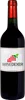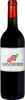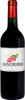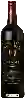
Maison BoueyCabernet Sauvignon Rosebelle
 Red wine
This wine generally goes well with poultry, beef or veal.

Food and wine pairings with Cabernet Sauvignon Rosebelle
Pairings that work perfectly with Cabernet Sauvignon Rosebelle



Original food and wine pairings with Cabernet Sauvignon Rosebelle

The Cabernet Sauvignon Rosebelle of Maison Bouey matches generally quite well with dishes of beef, veal or game (deer, venison) such as recipes of beef bourguignon with tomato, small stuffed provençal dishes or duck fillets with honey.
Details and technical informations about Maison Bouey's Cabernet Sauvignon Rosebelle.
Discover the grape variety: Cabernet-Sauvignon
Structured, tannic reds, deeply coloured, with aromas of blackcurrant, blackberry, cedar, tobacco and graphite, underpinned by firm acidity and fine ageing potential. Cornerstone of the great Médoc estates (Pauillac, Saint-Estèphe, Saint-Julien) and signature of Napa Valley, Coonawarra and Maipo. The world's most planted red variety, a natural cross of Cabernet Franc x Sauvignon Blanc born in Bordeaux.
Informations about the Maison Bouey
The Maison Bouey is one of wineries to follow in Bordeaux.. It offers 509 wines for sale in the of Bordeaux to come and discover on site or to buy online.

The wine region of Bordeaux
World-renowned age-worthy reds, led by round Merlot (plum, black fruit) or firm Cabernet Sauvignon (blackcurrant, cedar, graphite), blended with Cabernet Franc and Petit Verdot for tannic structure. Structured Médoc and Graves, velvety Saint-Émilion and Pomerol. Also crisp dry whites (Sauvignon/Sémillon) and opulent sweet Sauternes with honey and candied fruit. A 110,000 ha Gironde vineyard, 65 appellations, cradle of the 1855 classified growths.
The word of the wine: Oenologist
Specialist in wine-making techniques. It is a profession and not a passion: one can be an oenophile without being an oenologist (and the opposite too!). Formerly attached to the Faculty of Pharmacy, oenology studies have become independent and have their own university course. Learning to make wine requires a good chemical background but also, increasingly, a good knowledge of the plant. Some oenologists work in laboratories (analysis). Others, the consulting oenologists, work directly in the properties.