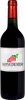
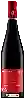
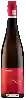
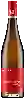
Winery BötzingerSpätburgunder Trocken
 Red wine


In the mouth this red wine is a with a nice freshness.
This wine generally goes well with poultry, beef or veal.

Taste structure of the Spätburgunder Trocken from the Winery Bötzinger
Light | Bold | |
Smooth | Tannic | |
Dry | Sweet | |
Soft | Acidic |
In the mouth the Spätburgunder Trocken of Winery Bötzinger in the region of Baden is a with a nice freshness.
Food and wine pairings with Spätburgunder Trocken
Pairings that work perfectly with Spätburgunder Trocken



Original food and wine pairings with Spätburgunder Trocken

The Spätburgunder Trocken of Winery Bötzinger matches generally quite well with dishes of beef, veal or game (deer, venison) such as recipes of daube niçoise, bacon and mushroom tagliatelle or rabbit with chorizo.
Details and technical informations about Winery Bötzinger's Spätburgunder Trocken.
Discover the grape variety: Rayon d'or
Simple, lively dry whites with a pale golden colour, a supple palate and preserved acidity showing unassertive citrus, white flower and herbaceous aromas typical of hybrid varieties. A rustic disease-resistant profile. Grown mainly in the United States (Missouri, Pennsylvania) and Canada for continental-climate vineyards, a legacy of post-phylloxera hybridisation.
Last vintages of this wine
The best vintages of Spätburgunder Trocken from Winery Bötzinger are 2018, 2012, 2016, 2014 and 2013.
Informations about the Winery Bötzinger
The Winery Bötzinger is one of of the world's greatest estates. It offers 63 wines for sale in the of Baden to come and discover on site or to buy online.

The wine region of Baden
German capital of Pinot Noir (Spätburgunder): silky, fine reds with notes of red fruits, cherry, undergrowth and sweet spices, melted tannins. Round Grauburgunder (Pinot Gris), lively Weissburgunder, supple Müller-Thurgau, mineral Riesling. Germany's 3rd region (15,000 ha) in Baden-Württemberg facing Alsace, one of the country's warmest climates, volcanic soils at the Kaiserstuhl. Cradle of modern great German reds, elegant and fine.
The word of the wine: Solera
A method of maturing practiced in Andalusia for certain sherries, which aims to continuously blend older and younger wines. It consists of stacking several layers of barrels; those located at ground level (solera) contain the oldest wines, the youngest being stored in the barrels on the upper level. The wine to be bottled is taken from the barrels on the lower level, which is replaced by younger wine from the upper level, and so on.