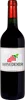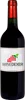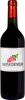
Bodegas Cano1860 Vendimia Seleccionada
 Red wine
In the mouth this red wine is a powerful.
This wine generally goes well with poultry, beef or veal.

Taste structure of the 1860 Vendimia Seleccionada from the Bodegas Cano
Light | Bold | |
Smooth | Tannic | |
Dry | Sweet | |
Soft | Acidic |
In the mouth the 1860 Vendimia Seleccionada of Bodegas Cano in the region of Vinos de Pago is a powerful.
Food and wine pairings with 1860 Vendimia Seleccionada
Pairings that work perfectly with 1860 Vendimia Seleccionada



Original food and wine pairings with 1860 Vendimia Seleccionada

The 1860 Vendimia Seleccionada of Bodegas Cano matches generally quite well with dishes of beef, pasta or veal such as recipes of cabri en colombo with creole sauce, eggplant and zucchini lasagna or oven-baked veal cutlets.
Details and technical informations about Bodegas Cano's 1860 Vendimia Seleccionada.
Discover the grape variety: Lercat
Simple, fresh dry whites with a pale golden robe and a supple palate with moderate acidity, with understated aromas of citrus and white flowers. Discreet rustic profile. Almost extinct, preserved in INRAE variety collections; bears witness to the pre-phylloxera ampelographic diversity of the South-West and is studied as a heritage variety for its genetic interest. Rare French white variety, once grown in the South-West.
Informations about the Bodegas Cano
The Bodegas Cano is one of of the world's greatest estates. It offers 7 wines for sale in the of Vinos de Pago to come and discover on site or to buy online.

The wine region of Vinos de Pago
Top of the Spanish quality pyramid (above DOCa and DO), reserved for 25 exceptional estates. Estate wines, grapes and vinification exclusively on site, 10 years of track record. All styles: concentrated, barrel-aged Cabernet, Syrah and Tempranillo reds (Dominio de Valdepusa, Arínzano, Pago de Otazu), maker's blends, a few ambitious whites. Great stylistic freedom.
The word of the wine: Performance
Quantity of grapes harvested per hectare. In AOC, the average yield is limited on the proposal of the appellation syndicate, validated by the Inao. The use of high-performance plant material (especially clones) and better control of vine diseases have increased yields. This is not without consequences on the quality of the wines (dilution) and on the state of the market (too much wine). We must not over-simplify: low yields are not synonymous with quality, and it is often in years with generous harvests that we find the greatest vintages (1982 and 1986 in Bordeaux, 1996 in Champagne, 1990 and 2005 in Burgundy...).