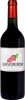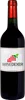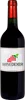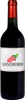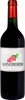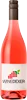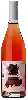
Winery Blended LearningDry Rosé
 Pink wine
This wine is a blend of 2 varietals which are the Mourvèdre and the Merlot.
This wine generally goes well with beef, game (deer, venison) or mature and hard cheese.
Food and wine pairings with Dry Rosé
Pairings that work perfectly with Dry Rosé



Original food and wine pairings with Dry Rosé
The Dry Rosé of Winery Blended Learning matches generally quite well with dishes of beef, game (deer, venison) or mature and hard cheese such as recipes of beef tongue with mushrooms, duckling with bigarrade or tomato and comté pie.
Details and technical informations about Winery Blended Learning's Dry Rosé.
Discover the grape variety: Mourvèdre
Mourvèdre noir is a grape variety originating from Spain. It produces a variety of grape specially used for wine making. It is rare to find this grape to eat on our tables. This variety of grape is characterized by medium to large bunches, and grapes of medium size. Mourvèdre noir can be found in several vineyards: South-West, Cognac, Bordeaux, Provence & Corsica, Rhône valley, Languedoc & Roussillon, Loire valley, Savoie & Bugey, Beaujolais.
Informations about the Winery Blended Learning
The Winery Blended Learning is one of of the world's greatest estates. It offers 9 wines for sale in the of Columbia Valley to come and discover on site or to buy online.

The wine region of Columbia Valley
The wine region of Columbia Valley is located in the region of Washington of United States. We currently count 841 estates and châteaux in the of Columbia Valley, producing 3147 different wines in conventional, organic and biodynamic agriculture. The wines of Columbia Valley go well with generally quite well with dishes .
The wine region of Washington
Washington State is located in the Pacific Northwest of the United States, immediately north of Oregon. Although the history of the wine industry is relatively Short, Washington's 900-plus wineries and 350-plus independent winemakers, with more than 50,000 acres of vineyards, now produce more wine than any other state except California. Almost all wine production is in the hot, desert-like eastern Part of Washington, although there is some Grape growing and an AVA (Puget Sound) in the cooler, wetter west. White Chardonnay and Riesling grapes, and red Merlot, Cabernet Sauvignon and Syrah grapes are the main varieties grown in Washington, but the region produces quality wines from nearly 70 different grape varieties.
The word of the wine: Lyon pot
A 46 cl bottle with a thick bottom, typical of the Lyon region, especially used to serve Beaujolais wines drawn from the barrel.